PreparED Study Materials

CHEM 0320: Organic Chemistry 2
School: University of Pittsburgh
Number of Notes and Study Guides Available: 37
Notes

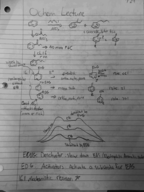
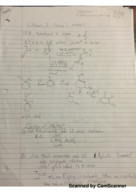
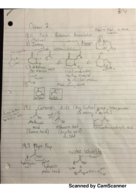
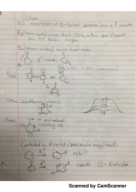
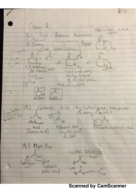


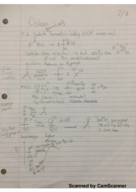
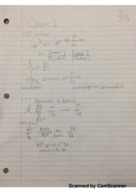
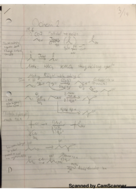
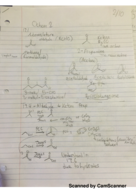

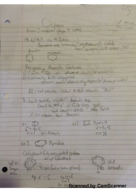
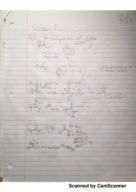
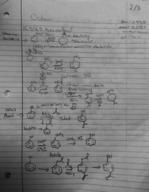
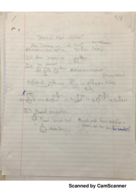
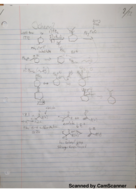

Organic chemistry 2 3/21 + 3/23 (Chemistry)
CHEM 0320
University of Pittsburgh
2 pages | Winter 2016



Study Guides

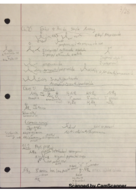
Chapter 18 reactions study guide (Chemistry)
CHEM 0320
University of Pittsburgh
1 page | Winter 2016

Chapter 16 reactions study guide (Chemistry)
CHEM 0320
University of Pittsburgh
1 page | Winter 2016

Videos
Calculating Density: Rectangular Metal Bar & Significance

Want To Learn More? To watch the entire video and ALL of the videos in the series:
full solution
Learn the process of determining the density of a rectangular metal bar using its measurements. Understand how volume and mass play a crucial role in the calculation, and the importance of representing results with the correct number of significant figures
Calculating Percent Composition: Using Molecular Formulas & Atomic Mas
Want To Learn More? To watch the entire video and ALL of the videos in the series:
full solution
Understand the process of calculating percent composition using the molecular formula. Grasp the methodology with compounds like C2H4O2, CH2O2, and more. Discover how atomic masses influence the mass percent of elements in various compounds.
Determining Bond Types: Ionic, Polar Covalent, or Covalent in Chemical
Want To Learn More? To watch the entire video and ALL of the videos in the series:
full solution
This discussion revolves around the classification of chemical bonds as ionic, polar covalent, or covalent based on the electronegativity difference between the atoms involved. The general criteria for this classification are explained: a difference greater than 1.7 indicates an ionic bond, between 0.5 and 1.7 signifies a polar covalent bond, and less than 0.5 designates a covalent bond. It then applies these criteria to four specific examples, including the CC bond in ethane (H?CCH?), the KI bo
Using Avogadro's Number: Calculating Moles of Aluminum & Iron Atoms
Want To Learn More? To watch the entire video and ALL of the videos in the series:
full solution
Learn how to determine the number of moles in a given set of atoms using Avogadro's number. This tutorial breaks down the calculation for Aluminum and Iron, simplifying the concept for better understanding.
Determining Base Concentration Using KHP: Indicator Choice Solution
Want To Learn More? To watch the entire video and ALL of the videos in the series:
full solution
Discover how to choose the right indicator for a titration involving Potassium hydrogen phthalate (KHP) and a strong base. Grasp the calculations from molar mass to pH and understand why Thymolphthalein is the ideal choice for a change near pH 8.95.
H-Cl Bond Energy Explained: ?H Signs Formation & Breakage Dynamics
Want To Learn More? To watch the entire video and ALL of the videos in the series:
full solution
Explore the concept of bond energy with the H-Cl bond as a prime example. Delve into the energy dynamics of bond breaking (endothermic positive ?H) versus bond formation (exothermic negative ?H). Understand how the magnitude remains consistent but signs differ based on energy absorption or release.