PreparED Study Materials

PHYS 7810: PHYS 7810
School: University of Colorado at Boulder
Number of Notes and Study Guides Available: 1
Notes
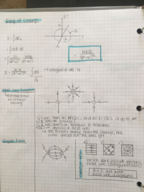
Special topics in physics (Physics)
PHYS 7810
University of Colorado at Boulder
30 pages | Fall 2015
Videos
Skiing Down an Incline: Length and Time Calculations

Want To Learn More? To watch the entire video and ALL of the videos in the series:
full solution
Embark on an exhilarating downhill ski adventure! In this video, we calculate the length of the incline and the time it takes for a skier to reach the bottom. Explore the physics of skiing on inclines and the thrill of motion.
Identifying Base Quantities in the SI System
Want To Learn More? To watch the entire video and ALL of the videos in the series:
full solution
Uncover the fundamental base quantities of the SI system and test your knowledge with a quiz to identify which one is not considered a base quantity. Is it mass, length, energy, time, or are they all base quantities? Join us to find out!
Kinetic Energy: Saturn 5 & Apollo at 11.2 km/s Speed
Want To Learn More? To watch the entire video and ALL of the videos in the series:
full solution
Learn how to calculate the kinetic energy of a Saturn 5 rocket with an Apollo spacecraft attached using physics principles and formulas. Understand the importance of unit conversion and the work-energy theorem as you plug values into the KE = 1/2 mv² formula. Discover that the kinetic energy for this rocket and spacecraft combo is an astonishing 1.82 x 10¹³ Joules.
Sandal's Velocity Relative to Ship and Shore Observer
Want To Learn More? To watch the entire video and ALL of the videos in the series:
full solution
Explore the intriguing physics of a sandal dropped from a moving ship and learn how to calculate its velocity relative to the ship and a stationary observer on shore.
Adding Water to a Glass: Temperature Change Calculation
Want To Learn More? To watch the entire video and ALL of the videos in the series:
full solution
Watch as we explore the fascinating world of thermal expansion in this video. We start with a glass filled to the brim with 350.0 mL of water at a scorching 100.0°C, and then witness the magic unfold as the temperature decreases to a cool 20.0°C. But the real question is, how much more water can we add to the glass? Join us to find out!
How is work related to energy?
Want To Learn More? To watch the entire video and ALL of the videos in the series:
full solution
Explore the profound link between these two fundamental concepts in physics, and understand how they relate through the Work-Energy Theorem.
Textbook Solutions (0)
Top Selling Study Tools
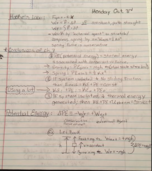
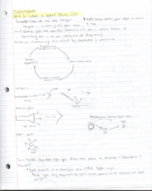


Week 6 notes- physics 2010 (Physics)
PHYS 2010
University of Colorado at Boulder
2 pages | Fall 2015
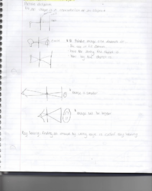
Week 7 notes- physics 2010 (Physics)
PHYS 2010
University of Colorado at Boulder
2 pages | Fall 2015