PreparED Study Materials

CHEM 125: Snow Chemistry Lab
School: University of Michigan
Number of Notes and Study Guides Available: 12
Notes
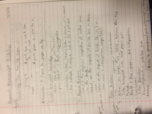


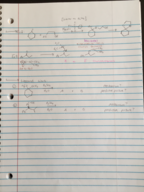
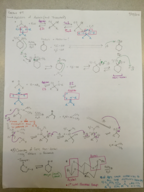
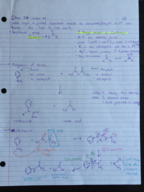
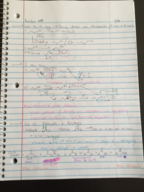
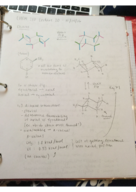
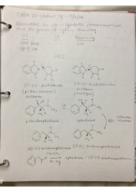
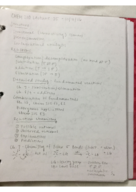
Chem 125 - section 400 - lab 3 notes (Chemistry)
CHEM 125
University of Michigan
3 pages | Fall 2016




Study Guides

Videos
Predicting Precipitates: Al(NO?)? & NaOH Reaction Explained

Want To Learn More? To watch the entire video and ALL of the videos in the series:
full solution
Unlock the secrets of precipitation reactions as we mix Aluminium nitrate and Sodium hydroxide. Discover how Al(NO?)? and NaOH interact forming the insoluble Aluminium hydroxide Al(OH)?. Break down the net ionic equation to highlight only the active participants.
Ionic vs. Molecular: Classifying Compounds & Metal Ion Varieties!
Want To Learn More? To watch the entire video and ALL of the videos in the series:
full solution
Discover the art of classifying compounds as ionic or molecular based on bonding. Unravel the nuances between ionic and covalent bonds using electronegativity differences as a guide. Classify CoCl2 CF4 BaSO4 and NO with in-depth explanations and predict their properties.
Decoding Electron Configurations: From Rubidium to Argon Explained
Want To Learn More? To watch the entire video and ALL of the videos in the series:
full solution
Explore the intricacies of electron configurations around the atomic nucleus. Understand the ordered filling of energy levels in atoms like Rubidium, Germanium, and Argon. A deep look into the ground-state configurations of key elements.
Breaking Down Mixtures: Finding Mass Percent of Sodium Compounds
Want To Learn More? To watch the entire video and ALL of the videos in the series:
full solution
Uncover the method to determine mass percentages of Sodium Bromide and Sodium Sulfate in a mixture using the given Sodium content. Walk through a step-by-step calculation leveraging molar masses to derive the composition. Discover the resulting mass percentages: 23.85% for Sodium Bromide and 76.15% for Sodium Sulfate
Glassware Drying with Acetone: The Science Behind It
Want To Learn More? To watch the entire video and ALL of the videos in the series:
full solution
This discussion delves into the use of acetone as a solvent for removing water from laboratory glassware, exploring the science behind its effectiveness and the role of hydrogen bonding in facilitating rapid evaporation.
Comparing O-O Bond Lengths: Hydrogen Peroxide vs. Oxygen Molecule
Want To Learn More? To watch the entire video and ALL of the videos in the series:
full solution
Explore the intricacies of hydrogen peroxide's Lewis structure and its bond characteristics. Understand the differences in bond lengths between H?O? and O?. Delve into the distinction between single and double bonds and their implications.