PreparED Study Materials

CHEM 109: General Chemistry
School: Humboldt State University
Number of Notes and Study Guides Available: 27
Notes




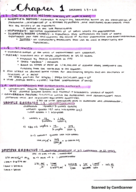

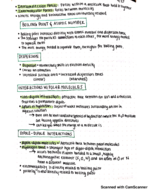



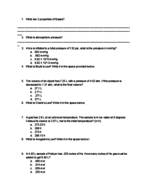
Study Guides





Videos
Mole Count in Elemental Samples (Zn, Ar, Ta, Li)

Want To Learn More? To watch the entire video and ALL of the videos in the series:
full solution
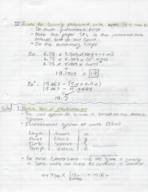
This video outlines the process of calculating the number of moles in various elemental samples. It begins by explaining the relationship between molar mass and atomic weight. Each sample's mass is divided by the respective element's molar mass to find the number of moles. It provides detailed calculations for four elemental samples: zinc (Zn), argon (Ar), tantalum (Ta), and lithium (Li), converting results to scientific notation where necessary. The script demonstrates how to determine the mole
Chromium Oxides: Acidity Comparison in Water
Want To Learn More? To watch the entire video and ALL of the videos in the series:
full solution
Compare the acidity of chromium trioxide (CrO?) and chromium (II) oxide (CrO) in water. Chromium trioxide forms strong chromic acid increasing hydronium ions, while chromium (II) oxide has weaker oxidizing properties, resulting in a less acidic solution.
Cyclohexane to Adipic Acid: Nylon's Yield Calculations
Want To Learn More? To watch the entire video and ALL of the videos in the series:
full solution
Explore the fascinating conversion of cyclohexane and oxygen into adipic acid, essential in nylon manufacture. This video breaks down the calculation of theoretical yield, actual yield, and the resultant percent yield of the process. From molar masses to intricate equations, get a concise understanding of this industrial reaction.
Precipitation Reactions Explained: From Solution to Solid Formation
Want To Learn More? To watch the entire video and ALL of the videos in the series:
full solution
Unravel the chemistry behind precipitation reactions and the creation of insoluble salts. Learn how aqueous ions interact to form solid precipitates, illustrated with examples like silver nitrate and sodium chloride. Understand their significance in fields from water treatment to qualitative analysis.
Reversible Enzyme Inhibition: Good or Bad? Exploring Implications
Want To Learn More? To watch the entire video and ALL of the videos in the series:
full solution
Delve into the complex world of enzymes and explore the implications of their reversible inhibition, shedding light on whether it's advantageous or detrimental to biological processes."
Element Classification: Rep, Trans, Inner-Trans, Noble Gases
Want To Learn More? To watch the entire video and ALL of the videos in the series:
full solution
We categorize elements into representative, transition, inner-transition, and noble gases based on their positions in the periodic table and general characteristics, without revealing specific element classifications.