PreparED Study Materials

CHEM 1015: Introduction to Chemistry
School: University of Minnesota
Number of Notes and Study Guides Available: 7
Notes
Study Guides


Videos
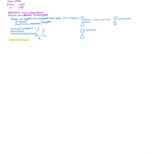
Drawing Lewis Structures for Potassium, Barium, Aluminum, and Bromine

Want To Learn More? To watch the entire video and ALL of the videos in the series:
full solution
We explore Lewis structures, which depict atom bonding and lone electron pairs. We create Lewis structures for potassium, barium, aluminum, and bromine by using group numbers in the periodic table to determine their valence electrons.
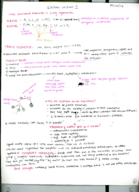
Homogeneous vs Heterogeneous Mixtures: Examples & Classification Expla
Want To Learn More? To watch the entire video and ALL of the videos in the series:
full solution
Explore the distinction between homogeneous and heterogeneous mixtures. Through real-world examples like baby oil, chocolate chip cookies, and wine, understand their uniformity, phases, and how components are distributed.
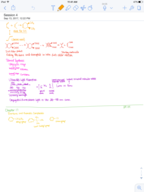
Identifying Redox Reactions & Agents: Four Chemistry Examples
Want To Learn More? To watch the entire video and ALL of the videos in the series:
full solution
Explore oxidation and reduction processes across four chemical reactions differentiating between acid-base and redox activities. Highlighting key substances and their roles in each reaction.
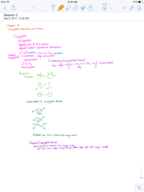
Argon Isotopes: Protons, Neutrons & Electrons Breakdown
Want To Learn More? To watch the entire video and ALL of the videos in the series:
full solution
Explore the captivating branches of philosophy, understanding ethics as our moral guide, aesthetics as the interpreter of beauty, and logic as the foundation for clear reasoning. Delight in the insights these disciplines offer, enhancing our perspectives on life, art, and thought.
Determining Moles of Released Ions in Dissolution Reactions
Want To Learn More? To watch the entire video and ALL of the videos in the series:
full solution
When an ionic compound dissolves in water, it undergoes dissociation into its constituent ions. The total moles of ions released is determined by adding up the moles of each ion generated during this dissociation process. In the case of (a) disodium hydrogen phosphate (Na?HPO?), it dissociates into two sodium ions and one hydrogen phosphate ion. For (b) copper(II) sulfate pentahydrate (CuSO? · 5H?O), it dissociates into one copper ion and one sulfate ion. In (c), nickel(II) chloride (NiCl?) diss
Evolutionary Implications of Cytochromes vs. Hemoglobin and Myoglobin
Want To Learn More? To watch the entire video and ALL of the videos in the series:
full solution
In this video, we delve into the fascinating world of evolutionary adaptations in heme-containing proteins.