PreparED Study Materials

Notes


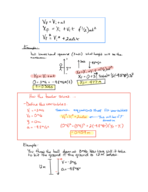


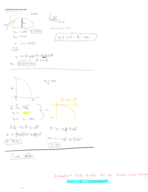




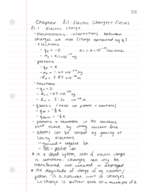
Energy work and conservation of mass (Physics)
PHY 121
Arizona State University
1 page | Summer 2015








Study Guides




Videos
Determining Kinetic Friction with a Spring-Loaded Block

Want To Learn More? To watch the entire video and ALL of the videos in the series:
full solution
Understand how to determine the coefficient of kinetic friction using a wooden block and a spring. Employing the law of conservation of energy, we use the spring's compression and stretch measurements. Through energy equations and Newton's second law, we deduce that ? equals 0.4.
Solving Acceleration & Deceleration Queries for a Commuter Train Expla
Want To Learn More? To watch the entire video and ALL of the videos in the series:
full solution
Explore the physics of a light-rail commuter train's motion. Understand how to calculate times for acceleration and deceleration using the equations of motion. Dive into the concept of emergency deceleration and its implications.
Calculating Ball Displacement Off a Table: A Physics & Calculus Insigh
Want To Learn More? To watch the entire video and ALL of the videos in the series:
full solution
Learn how to compute the displacement of a ball rolling off a table using calculus. Through the integration of velocity over a specific time interval, determine the ball's position. Uncover the mathematics behind real-world motion scenarios.
Warming Inhaled Air: Volume Increase Calculation
Want To Learn More? To watch the entire video and ALL of the videos in the series:
full solution
Explore the fascinating science of air temperature change in this video! We calculate how the volume of inhaled air increases as it warms from 0.0°C to body temperature. Discover the principles of thermal expansion in the human body.
Want To Learn More? To watch the entire video and ALL of the videos in the series:
full solution
Optimizing Launch Tube Acceleration for Maximum Points
Want To Learn More? To watch the entire video and ALL of the videos in the series:
full solution
Discover how to optimize the launch tube acceleration to achieve the maximum height and earn the most points in your laboratory experiment.