PreparED Study Materials

CHEM 4205: Medicinal Chemistry
School: Clayton State University
Number of Notes and Study Guides Available: 1
Notes

Videos
Calculating the Mass Percent Composition of Chloroform (CHCl?)

Want To Learn More? To watch the entire video and ALL of the videos in the series:
full solution
In this video, we delve into the concept of percent composition by mass, exemplified through the compound chloroform (CHCl?), which was once employed as an inhalation anesthetic despite its associated toxicity. By calculating the percent composition for each element within the compound, we gain valuable insights into its composition and its potential effects on health and properties.
0.800g Match to SO?: Volume Calculation at 725 Torr & 32°C!
Want To Learn More? To watch the entire video and ALL of the videos in the series:
full solution
Detailed walkthrough of calculating sulfur dioxide gas volume produced from burning tetraphosphorus trisulfide. Utilizes stoichiometry and the Ideal Gas Law to derive results under specific conditions. Step-by-step guide for understanding chemical reactions and gas volume calculations
Drawing the Lewis Structure for Glycine: The Protein Building Block
Want To Learn More? To watch the entire video and ALL of the videos in the series:
full solution
Discover how amino acids, specifically glycine, form the foundation of proteins. Understand and visualize the Lewis structure representation of glycine. Grasp the significance of atomic bonding and electron distribution.
Atomic Radius Trends: Unveiling Periodic Table Secrets
Want To Learn More? To watch the entire video and ALL of the videos in the series:
full solution
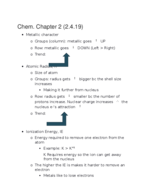
Discover the intricacies of atomic radius and its trends on the periodic table in this video. Unravel the factors influencing atomic size and explore how elements' positions on the periodic table affect their atomic radii.
Intermolecular Forces in HCl, F?, and C?H??
Want To Learn More? To watch the entire video and ALL of the videos in the series:
full solution
Explore the fascinating world of intermolecular forces in this brief video, featuring HCl, F?, and C?H?? molecules. Learn about the bonds that hold these substances together!
Identifying Elements, Compounds, and Mixtures
Want To Learn More? To watch the entire video and ALL of the videos in the series:
full solution
Join us in this enlightening video where we unravel the world of chemistry. We'll examine a series of options to identify elements, compounds, and mixtures. Explore the fascinating world of matter and discover how to distinguish these fundamental concepts. Whether you're a student or simply curious about the world of chemistry, this video will help you sharpen your understanding of the building blocks of matter.