PreparED Study Materials

CHEM 1128Q: General Chemistry
School: University of Connecticut
Number of Notes and Study Guides Available: 22
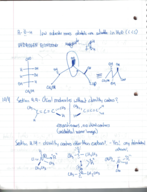
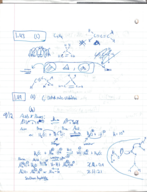
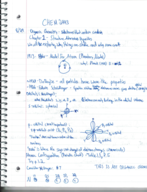
Notes





Study Guides

Videos
Diprotic Acid Titration: Determining Molar Mass

Want To Learn More? To watch the entire video and ALL of the videos in the series:
full solution
Discover how to find the molar mass of an unknown diprotic acid through a titration experiment with 0.1288 M NaOH. Learn step by step in this chemistry tutorial.
Classify: (a) Mixture (b) Element (c) Mixture (d) Compound
Want To Learn More? To watch the entire video and ALL of the videos in the series:
full solution
In this video, we classify substances as elements, compounds, or mixtures, with air and soy sauce as mixtures, iron as an element, and table salt as a compound.
Comparing Masses: Analyzing Water, Ethanol, Chloroform & Balsa Wood
Want To Learn More? To watch the entire video and ALL of the videos in the series:
full solution
Explore the relationship between mass, density, and volume using real-life examples, including water, ethanol, chloroform, and balsa wood. Learn the process of calculating mass and uncover which substance has the highest mass based on given conditions.
Volume of 49.8g HCl Gas at STP: Finding the Answer in Liters
Want To Learn More? To watch the entire video and ALL of the videos in the series:
full solution
This video guides viewers through the process of calculating the volume occupied by Hydrochloric acid gas or HCl at standard temperature and pressure. Using the molar mass of HCl and its properties as an ideal gas the tutorial comprehensively explains each step to determine the volume from a given mass at STP. A must-watch for understanding gas volume conversions in chemistry
Lewis Structures with Atom Connections & Charges
Want To Learn More? To watch the entire video and ALL of the videos in the series:
full solution
Learn how to create Lewis structures for various molecules and assign charges where needed. Understand the molecular connectivity and electron distribution.
Argon Isotopes: Protons, Neutrons & Electrons Breakdown
Want To Learn More? To watch the entire video and ALL of the videos in the series:
full solution
Explore the captivating branches of philosophy, understanding ethics as our moral guide, aesthetics as the interpreter of beauty, and logic as the foundation for clear reasoning. Delight in the insights these disciplines offer, enhancing our perspectives on life, art, and thought.