PreparED Study Materials
CHEM 101: Organic Chemistry II
School: DCH Regional Medical Center
Number of Notes and Study Guides Available: 0
Videos
Structures & Classifications of C?H?? Alkyl Groups: From Primary to Te

Want To Learn More? To watch the entire video and ALL of the videos in the series:
full solution
Explore the diverse structures of C?H?? alkyl groups and classify them into primary, secondary, or tertiary categories. Through a visualization of carbon atom arrangements, uncover the nuances of n-pentyl, sec-pentyl, tert-pentyl, isopentyl, and neopentyl structures.
Mass of Fluorine in 24.6g SnF? Toothpaste: A Breakdown
Want To Learn More? To watch the entire video and ALL of the videos in the series:
full solution
Tin(II) Fluoride in Toothpaste: Dive into the chemistry of Tin(II) Fluoride commonly used in toothpaste to prevent tooth decay. Understand molar mass calculations stoichiometry and determine the fluoride content in a given compound
Ether Structures: Ethyl to Dipentyl Varieties Drawn
Want To Learn More? To watch the entire video and ALL of the videos in the series:
full solution
Explore the chemical structures of four distinct ethers: ethyl propyl ether dibutyl ether methyl hexyl ether and dipentyl ether. Understand the role of ether groups which involve an oxygen atom connected to two alkyl or aryl groups.
The Remarkable Conservation of Peptidyl Transferase: Drawing Conclusio
Want To Learn More? To watch the entire video and ALL of the videos in the series:
full solution
Join us as we explore the fascinating world of peptidyl transferase, one of the most conserved sequences in biology. In this video, we delve into the implications and draw intriguing conclusions from its exceptional conservation across species.
Molecule Count in 0.334 g of C?H?: Ethane Analysis
Want To Learn More? To watch the entire video and ALL of the videos in the series:
full solution
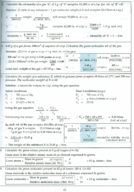
This instructional video guides you through the process of determining the number of molecules in a given sample. It illustrates the conversion from grams to moles using the molar mass of the substance and then to molecules using Avogadro's number, providing a practical example with ethane (C?H?) to calculate approximately 6.67 x 10²¹ molecules in a 0.334 g sample.
Lewis Structures with Atom Connections & Charges
Want To Learn More? To watch the entire video and ALL of the videos in the series:
full solution
Learn how to create Lewis structures for various molecules and assign charges where needed. Understand the molecular connectivity and electron distribution.