PreparED Study Materials

PHYSICS 113: PHYSICS 113
School: Ohio State University
Number of Notes and Study Guides Available: 0
Videos
Jet Takeoff: Tire Rotation, Centripetal Acceleration, and Bacterium's

Want To Learn More? To watch the entire video and ALL of the videos in the series:
full solution
Discover the dynamics of a commercial jet takeoff in this video! We explore tire rotation speed, centripetal acceleration, and a bacterium's grip on the rim. Dive into physics and microscopic forces, all while considering weight ratios.
The Pricey 'Jenny' Stamp: Calculating Focal Length
Want To Learn More? To watch the entire video and ALL of the videos in the series:
full solution
Explore the world of collectible stamps as we delve into the story of the rare 1918 'Jenny' stamp and its astonishing auction price. Join us to learn about the use of a simple magnifying glass to examine this valuable collectible and discover how to calculate its focal length.
Calculating Object and Oil Density through Buoyancy
Want To Learn More? To watch the entire video and ALL of the videos in the series:
full solution
Dive into the world of buoyancy and density in this video! We explore how an object's weight changes when immersed in water and oil. Join us to calculate the density of the object and the oil, unraveling the principles of fluid dynamics and buoyant forces.
Triangle Masses: Net Force and Side Length Effects
Want To Learn More? To watch the entire video and ALL of the videos in the series:
full solution
Discover the gravitational forces at play in a triangle of masses in this video. We calculate the net force on each mass and explore how changing the side length impacts these forces. Join us for a gravitational journey through physics.
Want To Learn More? To watch the entire video and ALL of the videos in the series:
full solution
Skiing Down an Incline: Length and Time Calculations
Want To Learn More? To watch the entire video and ALL of the videos in the series:
full solution
Embark on an exhilarating downhill ski adventure! In this video, we calculate the length of the incline and the time it takes for a skier to reach the bottom. Explore the physics of skiing on inclines and the thrill of motion.
Textbook Solutions (0)
Top Selling Study Tools





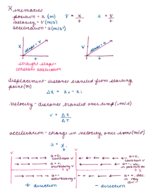




Physics 1250 class notes week five (Physics)
PHYSICS 1250
Ohio State University
13 pages | Fall 2016