PreparED Study Materials

CHE 320: Database Management Systems
School: Illinois State University
Number of Notes and Study Guides Available: 8
Notes








Videos
Hypothesis to Theory: The Evolution of Scientific Understanding

Want To Learn More? To watch the entire video and ALL of the videos in the series:
full solution
Delve into the journey of scientific ideas as we discuss how a hypothesis can evolve into a theory, and whether a theory can ever become a law. Uncover the distinctions and connections between these fundamental elements of scientific understanding in this illuminating video.
Where in the cell does fatty acid catabolism take place?
Want To Learn More? To watch the entire video and ALL of the videos in the series:
full solution
This video explores the process of fatty acid catabolism, highlighting its occurrence in the mitochondria, the crucial role of mitochondria in energy generation, and the metabolic reactions involved without revealing specific details or conclusions.
Argon Isotopes: Protons, Neutrons & Electrons Breakdown
Want To Learn More? To watch the entire video and ALL of the videos in the series:
full solution
Explore the captivating branches of philosophy, understanding ethics as our moral guide, aesthetics as the interpreter of beauty, and logic as the foundation for clear reasoning. Delight in the insights these disciplines offer, enhancing our perspectives on life, art, and thought.
Dilution Calculations: Copper(II) Nitrate, Calcium Chloride, Lithium C
Want To Learn More? To watch the entire video and ALL of the videos in the series:
full solution
Learn how to perform dilution calculations for solutions, including copper(II) nitrate, calcium chloride, and lithium carbonate, to achieve specific concentrations.
Ethylene Glycol: Mass and Volume Calculations
Want To Learn More? To watch the entire video and ALL of the videos in the series:
full solution
Explore how to calculate the mass and volume of ethylene glycol, a common antifreeze, using its density. Understand the essentials of density-related calculations.
Chromium Oxides: Acidity Comparison in Water
Want To Learn More? To watch the entire video and ALL of the videos in the series:
full solution
Compare the acidity of chromium trioxide (CrO?) and chromium (II) oxide (CrO) in water. Chromium trioxide forms strong chromic acid increasing hydronium ions, while chromium (II) oxide has weaker oxidizing properties, resulting in a less acidic solution.
Textbook Solutions (0)
Top Selling Study Tools




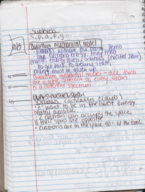

Che140 lecture notes 10.5 - 10.9 (Chemistry)
CHE 140
Illinois State University
5 pages | Summer 2015