PreparED Study Materials

PHYS 250: Matter and Energy
School: Winthrop University
Number of Notes and Study Guides Available: 1
Notes
Videos
Vector Addition: Can Different Magnitudes Equal Zero?

Want To Learn More? To watch the entire video and ALL of the videos in the series:
full solution
Join us in exploring the fascinating world of vectors and vector addition. In this video, we answer a fundamental question: Can two vectors with different magnitudes ever sum to zero? Delve into the principles of vector mathematics and discover the insights behind this intriguing concept. Tune in for a mind-expanding journey through the world of mathematics!
Amusement Park Divers: Speed and Physics Analysis
Want To Learn More? To watch the entire video and ALL of the videos in the series:
full solution
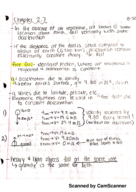
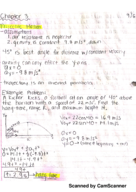
Step into the thrilling world of amusement park divers as we explore the physics behind their jaw-dropping stunts. Diving from a platform 21.3 meters (70 feet) above a pool of water, we investigate the announcer's claim that divers enter the water at a speed of 56 miles per hour (25 meters per second). We'll also uncover the possibility of divers leaping directly upward to achieve a specific water entry speed and examine the physical feasibility of such a feat. Join us for an educational journey
Calculating Work from Speed Change: Water-Skiing Physics Explained!
Want To Learn More? To watch the entire video and ALL of the videos in the series:
full solution
Explore the physics behind a water-skier accelerating from an initial speed to a faster one. Learn how to calculate the work done using the change in kinetic energy. Understand the principle of energy conservation through real-world examples.
Physics of Bouncing: Calculating Velocity & Energy Conservation Explor
Want To Learn More? To watch the entire video and ALL of the videos in the series:
full solution
Discover how energy conservation principles determine the velocity of a bouncing ball. Relate the ball's height and its potential and kinetic energies. Understand the velocity change upon impact and rebound.
Want To Learn More? To watch the entire video and ALL of the videos in the series:
full solution
Track Radius for 5.5g Acceleration: Approximate Value
Want To Learn More? To watch the entire video and ALL of the videos in the series:
full solution
Delve into the physics of high-speed tracks and calculate the radius where drivers experience a 5.5g acceleration, exploring the multiple options and their implications.