PreparED Study Materials

PHY 213: Engineering Physics 1
School: Kent State University
Number of Notes and Study Guides Available: 3
Notes

Videos
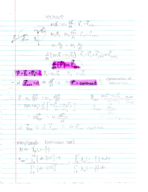
Comparing Single-Pane and Double-Pane Heat Loss Ratios

Want To Learn More? To watch the entire video and ALL of the videos in the series:
full solution
Explore the world of thermal insulation and heat loss in this video. We compare single-pane and double-pane windows, calculating the heat loss ratio. Delve into the fascinating science of heat transfer and insulation factors. Join us to uncover the secrets behind energy-efficient windows.
Solving Acceleration & Deceleration Queries for a Commuter Train Expla
Want To Learn More? To watch the entire video and ALL of the videos in the series:
full solution
Explore the physics of a light-rail commuter train's motion. Understand how to calculate times for acceleration and deceleration using the equations of motion. Dive into the concept of emergency deceleration and its implications.
Spherical Capacitor: Calculating Capacitance and Plate Area
Want To Learn More? To watch the entire video and ALL of the videos in the series:
full solution
Explore the concept of capacitance in a spherical capacitor and learn how to calculate it. Discover how to find the plate area for a parallel-plate capacitor with the same capacitance and separation.
Want To Learn More? To watch the entire video and ALL of the videos in the series:
full solution
Models in Relativity and Quantum Mechanics: An Explanation
Want To Learn More? To watch the entire video and ALL of the videos in the series:
full solution
Discover the significance of models in the fascinating realms of relativity and quantum mechanics, where conditions defy our everyday experience. Explore the concept of a model and its role in understanding these complex theories.
Sedna: Solar System's Most Distant Object's Motion
Want To Learn More? To watch the entire video and ALL of the videos in the series:
full solution
Journey to the outer reaches of our solar system with a captivating exploration of Sedna, the most distant-known object discovered in 2003. This enigmatic celestial body boasts a 1700 km diameter, a 10,500-year orbit around the sun, and a maximum speed of 4.64 km/s. Join us as we delve into the calculations of its elliptical orbit, its minimum speed, and the intriguing variations in its kinetic energy. Uncover the mysteries of Sedna's motion in this educational video.