
PreparED Study Materials

BCBP 86710: Chemistry I With Advanced Lab
School: Rensselaer Polytechnic Institute
Number of Notes and Study Guides Available: 0
Videos
Converting Moles to Grams: Aluminum & Chlorine Atomic Mass Breakdown

Want To Learn More? To watch the entire video and ALL of the videos in the series:
full solution
"Explore the intricate world of atomic masses using aluminum and chlorine as examples. Understand the concept of 'mole' and its relevance in chemistry. Learn to calculate masses of moles for elements based on atomic weights.
Drawing Lewis Structures for Potassium, Barium, Aluminum, and Bromine
Want To Learn More? To watch the entire video and ALL of the videos in the series:
full solution
We explore Lewis structures, which depict atom bonding and lone electron pairs. We create Lewis structures for potassium, barium, aluminum, and bromine by using group numbers in the periodic table to determine their valence electrons.
Cyclohexane to Adipic Acid: Nylon's Yield Calculations
Want To Learn More? To watch the entire video and ALL of the videos in the series:
full solution
Explore the fascinating conversion of cyclohexane and oxygen into adipic acid, essential in nylon manufacture. This video breaks down the calculation of theoretical yield, actual yield, and the resultant percent yield of the process. From molar masses to intricate equations, get a concise understanding of this industrial reaction.
Intermolecular Forces: Comparing Properties of Key Chemical Compounds
Want To Learn More? To watch the entire video and ALL of the videos in the series:
full solution
Discover the effects of intermolecular forces on the boiling point, freezing point, and vapor pressure of various compounds. Learn how hydrogen bonding, ionic bonding, and London dispersion forces influence these properties in different groups of molecules.
8 kJ to
Want To Learn More? To watch the entire video and ALL of the videos in the series:
full solution
Hydrogen Peroxide Molecule Classification
Want To Learn More? To watch the entire video and ALL of the videos in the series:
full solution
This discussion explores the nature of hydrogen peroxide as a compound composed of hydrogen and oxygen atoms and categorizes it as either a homoatomic or heteroatomic molecule.
Textbook Solutions (0)
Top Selling Study Tools

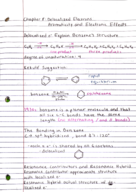


Organic reactions week 3 (Chemistry)
BCBP 1200
Rensselaer Polytechnic Institute
1 page | Summer 2015

Electrochemistry part 2 (Chemistry)
BCBP 1200
Rensselaer Polytechnic Institute
5 pages | Summer 2015


Organic chemistry: ch.8 (Chemistry)
BCBP 2250
Rensselaer Polytechnic Institute
6 pages | Summer 2015


