PreparED Study Materials

CHEM 103: General Chemistry I
School: University of Wisconsin - Madison
Number of Notes and Study Guides Available: 17
Notes
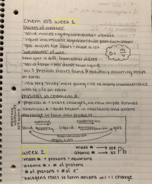

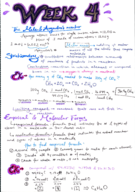
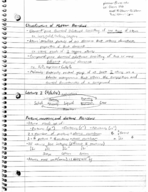
Weeks 1-4 chemistry 103 (Chemistry)
CHEM 103
University of Wisconsin - Madison
8 pages | Summer 2015

Study Guides

Videos
Where in the cell does fatty acid catabolism take place?

Want To Learn More? To watch the entire video and ALL of the videos in the series:
full solution
This video explores the process of fatty acid catabolism, highlighting its occurrence in the mitochondria, the crucial role of mitochondria in energy generation, and the metabolic reactions involved without revealing specific details or conclusions.
Glassware Drying with Acetone: The Science Behind It
Want To Learn More? To watch the entire video and ALL of the videos in the series:
full solution
This discussion delves into the use of acetone as a solvent for removing water from laboratory glassware, exploring the science behind its effectiveness and the role of hydrogen bonding in facilitating rapid evaporation.
Hypothesis to Theory: The Evolution of Scientific Understanding
Want To Learn More? To watch the entire video and ALL of the videos in the series:
full solution
Delve into the journey of scientific ideas as we discuss how a hypothesis can evolve into a theory, and whether a theory can ever become a law. Uncover the distinctions and connections between these fundamental elements of scientific understanding in this illuminating video.
Iron Bar: Mass Change and Rust Formation
Want To Learn More? To watch the entire video and ALL of the videos in the series:
full solution
Learn about mass changes in an iron bar when exposed to moist air, including the formation of rust (Fe?O?) and how to calculate the final mass.
Molecular Formulas: Lewis Structures for N2, HCN, CO2, C3H6, and More
Want To Learn More? To watch the entire video and ALL of the videos in the series:
full solution
Discover Lewis structures for various molecular formulas, including N2, HCN, CO2, C3H6, and more. Explore their chemical bonding and structural arrangements.
Determining Mass Percent Concentration of Solutions
Want To Learn More? To watch the entire video and ALL of the videos in the series:
full solution
This instructional video demonstrates the process of calculating the mass percent of various solutions, using the formula "mass of solute divided by mass of solution, all multiplied by 100%." It provides step-by-step calculations for three different solutions, revealing the concentration of each solute in terms of mass percent, offering a practical understanding of quantifying solute proportions in solutions.
Textbook Solutions (0)
Top Selling Study Tools


Chem 343 10/12 lecture 16 (Chemistry)
CHEM 343
University of Wisconsin - Madison
9 pages | Fall 2015