PreparED Study Materials

CHEM 109: General Chemistry
School: Humboldt State University
Number of Notes and Study Guides Available: 27
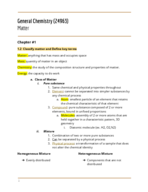
Notes




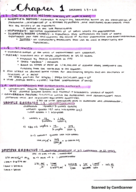

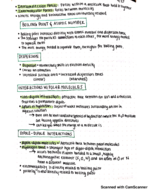



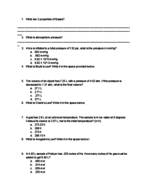
Study Guides





Videos
Classifying the Boiling of Water: Physical or Chemical Change? Justify

Want To Learn More? To watch the entire video and ALL of the videos in the series:
full solution
This video tackles the classification of boiling water as either a physical or chemical change, examining the provided options. We conclude that boiling is a physical change, as the water's chemical composition remains the same during the transition from liquid to gas.
Copper Bombardment: Calculating X-ray Photon Energy
Want To Learn More? To watch the entire video and ALL of the videos in the series:
full solution
We'll guide you through the process of calculating the energy associated with X-ray photons when the wavelength is 0.154 nm. This video offers a practical application of physics and helps you understand the energy spectrum of X-rays. Whether you're a science enthusiast or a student, you'll gain valuable insights into this intriguing topic.
Diprotic Acid Titration: Determining Molar Mass
Want To Learn More? To watch the entire video and ALL of the videos in the series:
full solution
Discover how to find the molar mass of an unknown diprotic acid through a titration experiment with 0.1288 M NaOH. Learn step by step in this chemistry tutorial.
CS?, SO?, CH?, & CH?Cl: Are They Polar or Nonpolar Molecules?
Want To Learn More? To watch the entire video and ALL of the videos in the series:
full solution
Explore the polarity of Carbon disulfide, Sulfur dioxide, Methane, and Chloromethane. Learn how molecular shape influences electron distribution. Understand which molecules possess a net dipole moment and which ones don't.
Understanding Reaction Rate Decrease Over Time
Want To Learn More? To watch the entire video and ALL of the videos in the series:
full solution
This explanation delves into the phenomenon where the reaction rate decreases over time due to the decrease in reactant concentration, resulting in fewer successful collisions and reactions, without revealing specific examples or findings.
Dilution Calculations: Copper(II) Nitrate, Calcium Chloride, Lithium C
Want To Learn More? To watch the entire video and ALL of the videos in the series:
full solution
Learn how to perform dilution calculations for solutions, including copper(II) nitrate, calcium chloride, and lithium carbonate, to achieve specific concentrations.