PreparED Study Materials

CHEM 110: General Chemistry II
School: Humboldt State University
Number of Notes and Study Guides Available: 7
Notes



Videos

Want To Learn More? To watch the entire video and ALL of the videos in the series:
full solution
Determining Moles of Released Ions in Dissolution Reactions
Want To Learn More? To watch the entire video and ALL of the videos in the series:
full solution
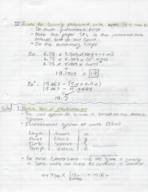
When an ionic compound dissolves in water, it undergoes dissociation into its constituent ions. The total moles of ions released is determined by adding up the moles of each ion generated during this dissociation process. In the case of (a) disodium hydrogen phosphate (Na?HPO?), it dissociates into two sodium ions and one hydrogen phosphate ion. For (b) copper(II) sulfate pentahydrate (CuSO? · 5H?O), it dissociates into one copper ion and one sulfate ion. In (c), nickel(II) chloride (NiCl?) diss
Glycerin Solution Vapor Pressure at 39.88°C
Want To Learn More? To watch the entire video and ALL of the videos in the series:
full solution
Discover how to calculate the vapor pressure of a glycerin solution when mixed with water at a specific temperature. A valuable chemistry lesson.
Drawing Open-Chain Structures: A Visual Guide to Four Sugars
Want To Learn More? To watch the entire video and ALL of the videos in the series:
full solution
Learn how to draw open-chain structures for various sugars, from ketotetrose to amino sugars. This video offers visual demonstrations of ketopentose, deoxyaldohexose, and more, highlighting key molecular differences.
Decoding Ions: Al³?, S²?, I?, Ag? & Their Electron-Proton Dynamics
Want To Learn More? To watch the entire video and ALL of the videos in the series:
full solution
Break down the mysteries of ions like Al³?, S²?, I?, and Ag?. Discover how the electron count impacts ion charge by exploring Aluminium, Sulfur, Iodine, and Silver. Enhance your understanding of protons, electrons, and their relationship in ions.
Want To Learn More? To watch the entire video and ALL of the videos in the series:
full solution