PreparED Study Materials

CHEM 2302: Organic Chemistry II
School: University of Minnesota
Number of Notes and Study Guides Available: 19
Notes
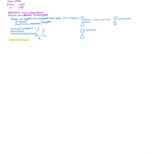
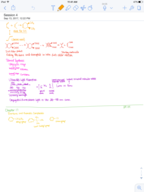
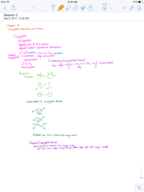


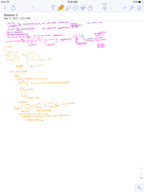
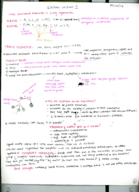
Notes for week of october 12-16 (Chemistry)
CHEM 2302
University of Minnesota
16 pages | Summer 2015



Study Guides

Videos
Glycogen Synthesis and Phosphorylase Deactivation: Essential Mechanism

Want To Learn More? To watch the entire video and ALL of the videos in the series:
full solution
Delve into the intricate interplay between glycogen synthesis activation and glycogen phosphorylase deactivation. Discover the essential mechanisms that ensure the efficient management of glucose storage and utilization in the body.
Classifying the Boiling of Water: Physical or Chemical Change? Justify
Want To Learn More? To watch the entire video and ALL of the videos in the series:
full solution
This video tackles the classification of boiling water as either a physical or chemical change, examining the provided options. We conclude that boiling is a physical change, as the water's chemical composition remains the same during the transition from liquid to gas.
Molecular Lewis Structures for CH?, CO?, H?Se, and NH?
Want To Learn More? To watch the entire video and ALL of the videos in the series:
full solution
In this video, we demonstrate the creation of Lewis structures for methane, carbon dioxide, hydrogen selenide, and ammonia, highlighting the arrangement of atoms and bonds in each molecule. The video emphasizes the importance of Lewis structures in visualizing atomic bonding and the presence of lone electron pairs.
Shapes & Forces: How Molecule Structure Affects Bonds
Want To Learn More? To watch the entire video and ALL of the videos in the series:
full solution
Unveil the correlation between molecular shapes and their respective intermolecular forces. Delve into the specifics of nitrogen trichloride, ammonia, silane, and carbon tetrachloride, highlighting their unique force interactions based on polarity.
Net ATP Yield from Oleic Acid (18:1 ??) Calculation
Want To Learn More? To watch the entire video and ALL of the videos in the series:
full solution
Join us in this video as we dive into the intricacies of calculating the net ATP yield from oleic acid (18:1 ??). We'll provide a step-by-step guide and offer helpful hints to ensure an accurate calculation, including a critical step that bypasses acyl-CoA dehydrogenase.
Glassware Drying with Acetone: The Science Behind It
Want To Learn More? To watch the entire video and ALL of the videos in the series:
full solution
This discussion delves into the use of acetone as a solvent for removing water from laboratory glassware, exploring the science behind its effectiveness and the role of hydrogen bonding in facilitating rapid evaporation.