PreparED Study Materials

CHEM 2400: Organic Chemistry I
School: Georgia State University
Number of Notes and Study Guides Available: 51
Notes
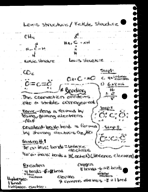











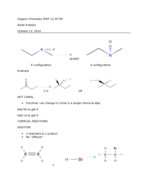


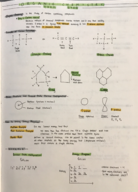
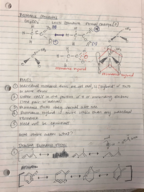
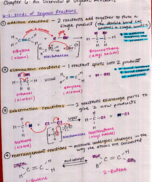

Study Guides

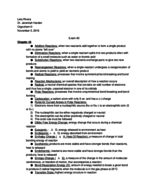
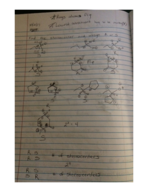


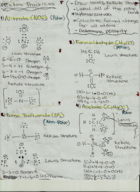




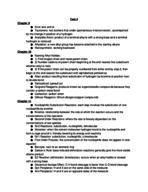

Organic chemistry 1 exam 2 review (Chemistry)
CHEM 2400
Georgia State University
5 pages | Fall 2015

Videos
Tausonite's Unit Cell: Atoms & Formula Explained

Want To Learn More? To watch the entire video and ALL of the videos in the series:
full solution
Unpack the intricacies of solid-state chemistry, focusing on the unit cell structure of tausonite. Discover its empirical formula, atomic arrangement, and the unique coordination patterns of titanium and strontium with oxygen atoms.
Counting Chlorine Atoms in Key Chemical Compounds: A Detailed Breakdow
Want To Learn More? To watch the entire video and ALL of the videos in the series:
full solution
Uncover the count of chlorine atoms in various chemical compounds. Grasp the calculations in Carbon tetrachloride, Calcium chloride, Phosphorus trichloride, and Sodium chloride. Gain clarity on atomic count across multiple molecules.
Strong Base Comparison: H?S?, CH?O?, CH?OH, Cl?, CH?COO?, CH?CHClCOO
Want To Learn More? To watch the entire video and ALL of the videos in the series:
full solution
Explore the reactivity of different bases in this chemistry comparison. We'll analyze the strength of H?S?, CH?O?, CH?OH, Cl?, CH?COO?, and CH?CHClCOO? in various reactions.
Understanding Reaction Rate Decrease Over Time
Want To Learn More? To watch the entire video and ALL of the videos in the series:
full solution
This explanation delves into the phenomenon where the reaction rate decreases over time due to the decrease in reactant concentration, resulting in fewer successful collisions and reactions, without revealing specific examples or findings.
Understanding Electron Configurations of Ions: The Noble Gas Connectio
Want To Learn More? To watch the entire video and ALL of the videos in the series:
full solution
Unravel the electron configurations of diverse ions and discern their noble gas resemblances. Understand how atoms and ions strive for full outer electron shells for ultimate stability.
Do Rusting and Burning Violate Conservation of Mass?
Want To Learn More? To watch the entire video and ALL of the videos in the series:
full solution
This video explores the processes of rusting in iron and burning a match, addressing whether the observed changes in mass violate the law of conservation of mass, and explains how these processes align with the law.
Textbook Solutions (0)
Top Selling Study Tools


Glycolysis regulation cheat sheet (Chemistry)
CHEM 4600
Georgia State University
3 pages | Fall 2015




Chem 1152k polysaccharide notes (Chemistry)
CHEM 1152
Georgia State University
2 pages | Winter 2016



Chem 1211k (finnegan) test dates (Chemistry)
CHEM 1211
Georgia State University
1 page | Spring 2016