PreparED Study Materials

CHM 235: Elementary Organic Chem Lab
School: Arizona State University
Number of Notes and Study Guides Available: 1
Notes
Videos
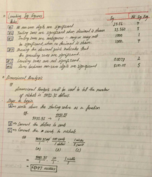
Disulfur Decafluoride Disproportionation & Sulfur Oxidation States

Want To Learn More? To watch the entire video and ALL of the videos in the series:
full solution
This video explains the disproportionation reaction of disulfur decafluoride at 150°C. It teaches you to write a balanced equation for this reaction and give the oxidation state of S in each compound.
Determining Ionizable H Atoms in Malonic Acid via Neutralization
Want To Learn More? To watch the entire video and ALL of the videos in the series:
full solution
Explore the process of determining ionizable hydrogen atoms in malonic acid using its molecular formula C3H4O4 and a neutralization reaction with Sodium hydroxide. Through methodical calculations involving the given mass of malonic acid and the required volume of Sodium hydroxide for neutralization we uncover that each molecule of malonic acid contains two ionizable H atoms.
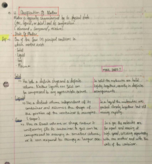
Element Classification: Rep, Trans, Inner-Trans, Noble Gases
Want To Learn More? To watch the entire video and ALL of the videos in the series:
full solution
We categorize elements into representative, transition, inner-transition, and noble gases based on their positions in the periodic table and general characteristics, without revealing specific element classifications.
Drawing Open-Chain Structures: A Visual Guide to Four Sugars
Want To Learn More? To watch the entire video and ALL of the videos in the series:
full solution
Learn how to draw open-chain structures for various sugars, from ketotetrose to amino sugars. This video offers visual demonstrations of ketopentose, deoxyaldohexose, and more, highlighting key molecular differences.
Making a 0.150 M Ba(OH)? Solution: A Step-by-Step Guide
Want To Learn More? To watch the entire video and ALL of the videos in the series:
full solution
Learn how to calculate the amount of Barium hydroxide, Ba(OH)?, needed to prepare a specific molar concentration. This tutorial breaks down the relationship between moles of hydroxide ions and moles of Ba(OH)?, guiding users through each step for precise results. Embrace the essence of molarity in solution preparation.
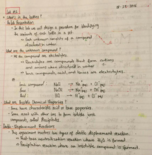
Chemical Formulas: CaI?, N?O?, SiO?, ZnCl? for Atom Ratios
Want To Learn More? To watch the entire video and ALL of the videos in the series:
full solution
Unlock the world of chemical formulas and their atom ratios. Learn to write compounds like CaI?, N?O?, SiO?, and ZnCl? in this chemistry tutorial.