
PreparED Study Materials

CHEM 030: Intro to Chemical Principles
School: Lehigh University
Number of Notes and Study Guides Available: 35
Notes









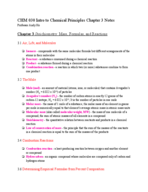



Study Guides
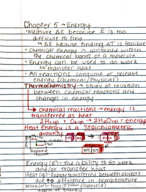



Videos
Determining Base Concentration Using KHP: Indicator Choice Solution

Want To Learn More? To watch the entire video and ALL of the videos in the series:
full solution
Discover how to choose the right indicator for a titration involving Potassium hydrogen phthalate (KHP) and a strong base. Grasp the calculations from molar mass to pH and understand why Thymolphthalein is the ideal choice for a change near pH 8.95.
Mole Fractions, Partial Pressures, and Total Pressure Calculation
Want To Learn More? To watch the entire video and ALL of the videos in the series:
full solution
Explore the calculations for mole fractions, partial pressures, and total pressure in a 22.4 dm³ vessel with H? and N? at 273.15 K.
Hypothesis to Theory: The Evolution of Scientific Understanding
Want To Learn More? To watch the entire video and ALL of the videos in the series:
full solution
Delve into the journey of scientific ideas as we discuss how a hypothesis can evolve into a theory, and whether a theory can ever become a law. Uncover the distinctions and connections between these fundamental elements of scientific understanding in this illuminating video.
Chromium(III) Oxide Reaction: Calculating Precise Quantities
Want To Learn More? To watch the entire video and ALL of the videos in the series:
full solution
Learn the art of precise chemical calculations in this video. Discover how Chromium(III) oxide reacts with hydrogen sulfide to form chromium(III) sulfide and water, all while unraveling the necessary steps to determine the exact quantities involved.
Calculating the Mass of a Sucrose Crystal: A Chemistry Insight
Want To Learn More? To watch the entire video and ALL of the videos in the series:
full solution
Explore the fascinating world of chemistry as we calculate the mass of a sugar crystal with 1.8 x 10¹? molecules of sucrose. Using the concept of a mole and Avogadro's number, discover how to convert molecular numbers to milligrams. Grasp foundational principles in a clear, engaging format.
Intermolecular Forces: Comparing Properties of Key Chemical Compounds
Want To Learn More? To watch the entire video and ALL of the videos in the series:
full solution
Discover the effects of intermolecular forces on the boiling point, freezing point, and vapor pressure of various compounds. Learn how hydrogen bonding, ionic bonding, and London dispersion forces influence these properties in different groups of molecules.


