PreparED Study Materials

CHM 221: Organic Chemistry I
School: Mercer University
Number of Notes and Study Guides Available: 1
Notes
Videos
Chemical Formulas: CaI?, N?O?, SiO?, ZnCl? for Atom Ratios

Want To Learn More? To watch the entire video and ALL of the videos in the series:
full solution
Unlock the world of chemical formulas and their atom ratios. Learn to write compounds like CaI?, N?O?, SiO?, and ZnCl? in this chemistry tutorial.
Metric Conversions: cm to m, g to kg, cm to mm, mL to L
Want To Learn More? To watch the entire video and ALL of the videos in the series:
full solution
Master metric unit conversions with step-by-step examples, including cm to meters, g to kilograms, cm to millimeters, and mL to liters.
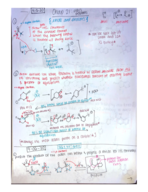
Amino Acid Structural Formulas at Low pH
Want To Learn More? To watch the entire video and ALL of the videos in the series:
full solution
Explore the protonation of amino acids, specifically valine and threonine, when subjected to a pH lower than their isoelectric points, highlighting the structural changes in their carboxyl and amino groups.
Calculating Density: Rectangular Metal Bar & Significance
Want To Learn More? To watch the entire video and ALL of the videos in the series:
full solution
Learn the process of determining the density of a rectangular metal bar using its measurements. Understand how volume and mass play a crucial role in the calculation, and the importance of representing results with the correct number of significant figures
Ionic Character Comparison: Analyzing NaBr vs. HBr and BrCl vs. FCl
Want To Learn More? To watch the entire video and ALL of the videos in the series:
full solution
Discover the analysis of ionic character in compounds based on electronegativity differences. Learn about the contrasts between NaBr vs. HBr and BrCl vs. FCl. Grasp why NaBr and FCl showcase greater ionic character than their paired compounds.
Drawing Lewis Structures for Potassium, Barium, Aluminum, and Bromine
Want To Learn More? To watch the entire video and ALL of the videos in the series:
full solution
We explore Lewis structures, which depict atom bonding and lone electron pairs. We create Lewis structures for potassium, barium, aluminum, and bromine by using group numbers in the periodic table to determine their valence electrons.