PreparED Study Materials

Notes

Videos
STP Reactions: How Phosphorus & Oxygen Form P?O??

Want To Learn More? To watch the entire video and ALL of the videos in the series:
full solution
Grasp the concept of Standard Temperature and Pressure (STP) and its significance in chemistry. Through a practical example, this video elucidates how phosphorus reacts with oxygen at STP to produce tetraphosphorus decaoxide. Comprehensive mole calculations and chemical equations simplify this intriguing chemical process.
Specific Rotation Calculation: Polarimeter Demystified
Want To Learn More? To watch the entire video and ALL of the videos in the series:
full solution
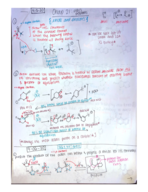
Discover how to calculate specific rotations of samples using a polarimeter in this informative chemistry tutorial. Explore optical activity and learn step-by-step calculations for two real-world examples. Enhance your understanding of specific rotation and its application in chemical analysis.
Calculating Percent Error: Insights into Experiment Accuracy & Refinem
Want To Learn More? To watch the entire video and ALL of the videos in the series:
full solution
Discover the importance of calculating percent error to assess the precision of experiments. Through real-world examples like measuring alcohol's density and the mass of gold, learn how this value offers insights into measurement accuracy and ways to refine methods.
Classifying Formaldehyde, Methanol, Dichloromethane & CO?: Polar or No
Want To Learn More? To watch the entire video and ALL of the videos in the series:
full solution
Explore the classification of select molecules based on their polarity. Understand the electron distribution and molecular shapes of Formaldehyde, Methanol, Dichloromethane, and Carbon dioxide. Discover which ones exhibit a net dipole moment and which ones don't.
Tailors' Seam Measurements: Precision and Accuracy Analysis
Want To Learn More? To watch the entire video and ALL of the videos in the series:
full solution
An in-depth analysis of the precision and accuracy in seam measurements by three apprentice tailors: X, Y, and Z, as they measure a pair of trousers. Understand how their measurements compare to the true length of 32.0 inches.
Mastering Mass, Moles, Formula Units & Atoms
Want To Learn More? To watch the entire video and ALL of the videos in the series:
full solution
Discover how to precisely calculate mass, moles, formula units, and atoms in various compounds. Understand the concept with examples like chromium(III) sulfate decahydrate, dichlorine heptoxide, and lithium sulfate. Master chemistry calculations through a step-by-step guide.