PreparED Study Materials

PHYS 1201: Why the Sky Is Blue: Aspects of the Physical World
School: Cornell University
Number of Notes and Study Guides Available: 0
Videos
Electron's Journey: Work and Thermal Energy Transfer

Want To Learn More? To watch the entire video and ALL of the videos in the series:
full solution
Join us for a journey with electrons in this video! We explore the motion of an electron through a resistive strip powered by a 12V battery. Discover the electron's direction, work done by the electric field, and the transfer of energy to thermal energy in the strip.
Projectile Range and Optimal Launch Angles Explained
Want To Learn More? To watch the entire video and ALL of the videos in the series:
full solution
Join us in this enlightening video as we explore the fascinating world of projectiles and their optimal launch angles. We dive into the physics behind how a fixed initial speed affects the range of a projectile and why, for most angles, there are two choices that yield the same range. Delve into factors that affect an archer's ability to hit a target, including wind, and learn why a smaller angle, closer to the horizontal, is often preferable. Discover when and why a larger angle may be necessar
Earth's Measurements: Circumference, Surface Area, and Volume
Want To Learn More? To watch the entire video and ALL of the videos in the series:
full solution
Explore Earth's dimensions in this video! We calculate its circumference, surface area, and volume. Join us to understand the scope of our planet, both in its physical size and mathematical concepts.
Terminal Voltage Calculation for Battery with Resistors
Want To Learn More? To watch the entire video and ALL of the videos in the series:
full solution
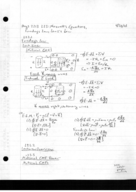
Unlock the secrets of battery performance in this video! We calculate the terminal voltage for a battery with internal resistance, connected in series with resistors of different values. Explore the effects of resistance on voltage in electrical circuits.
Adding Water to a Glass: Temperature Change Calculation
Want To Learn More? To watch the entire video and ALL of the videos in the series:
full solution
Watch as we explore the fascinating world of thermal expansion in this video. We start with a glass filled to the brim with 350.0 mL of water at a scorching 100.0°C, and then witness the magic unfold as the temperature decreases to a cool 20.0°C. But the real question is, how much more water can we add to the glass? Join us to find out!
Spacecraft Speed Change in 1 Week with 0.09-N Thrust
Want To Learn More? To watch the entire video and ALL of the videos in the series:
full solution
Discover the impact of a 0.09-N thrust engine on a 480 kg spacecraft's speed during 1 week of maximum power operation. Uncover the assumptions involved in this space physics scenario.