
PreparED Study Materials

BCBP 2250: Organic Chemistry 1
School: Rensselaer Polytechnic Institute
Number of Notes and Study Guides Available: 15
Notes
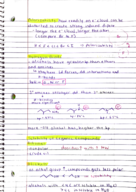
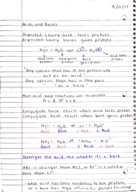
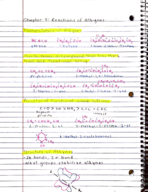

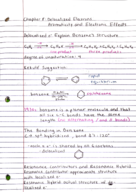

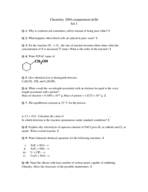
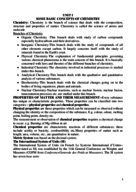
Organic chemistry: ch.8 (Chemistry)
BCBP 2250
Rensselaer Polytechnic Institute
6 pages | Summer 2015

Study Guides


Videos
Decoding Ions: Al³?, S²?, I?, Ag? & Their Electron-Proton Dynamics

Want To Learn More? To watch the entire video and ALL of the videos in the series:
full solution
Break down the mysteries of ions like Al³?, S²?, I?, and Ag?. Discover how the electron count impacts ion charge by exploring Aluminium, Sulfur, Iodine, and Silver. Enhance your understanding of protons, electrons, and their relationship in ions.
Calculating the Mass of CCl4: Using Density and Volume Insights
Want To Learn More? To watch the entire video and ALL of the videos in the series:
full solution
Learn the method to calculate the mass of a substance using its density and volume. This video demonstrates the practical application of density in determining the mass of carbon tetrachloride (CCl4) from a given volume.
Converting Various Units: Weight, Time, Height, and Volume
Want To Learn More? To watch the entire video and ALL of the videos in the series:
full solution
This video focuses on unit conversions and the practical use of conversion factors to translate quantities between different units. It provides clear examples of converting 70 kilograms to pounds, translating 14 billion years into seconds, changing the height of a basketball player from feet and inches to meters, and converting cubic meters to liters, illustrating the importance of this skill in various scientific and everyday scenarios.
Calculating the Mass of a Sucrose Crystal: A Chemistry Insight
Want To Learn More? To watch the entire video and ALL of the videos in the series:
full solution
Explore the fascinating world of chemistry as we calculate the mass of a sugar crystal with 1.8 x 10¹? molecules of sucrose. Using the concept of a mole and Avogadro's number, discover how to convert molecular numbers to milligrams. Grasp foundational principles in a clear, engaging format.
Deriving the Perfect Gas Equation from Gas Laws
Want To Learn More? To watch the entire video and ALL of the videos in the series:
full solution
Learn how the ideal gas equation is derived from Boyle's law, Charles’ law, and Avogadro's principle, unraveling the fundamentals of gas behavior.
Determining Bond Types: Ionic, Polar Covalent, or Covalent in Chemical
Want To Learn More? To watch the entire video and ALL of the videos in the series:
full solution
This discussion revolves around the classification of chemical bonds as ionic, polar covalent, or covalent based on the electronegativity difference between the atoms involved. The general criteria for this classification are explained: a difference greater than 1.7 indicates an ionic bond, between 0.5 and 1.7 signifies a polar covalent bond, and less than 0.5 designates a covalent bond. It then applies these criteria to four specific examples, including the CC bond in ethane (H?CCH?), the KI bo
Textbook Solutions (0)
Top Selling Study Tools


Organic reactions week 3 (Chemistry)
BCBP 1200
Rensselaer Polytechnic Institute
1 page | Summer 2015

Electrochemistry part 2 (Chemistry)
BCBP 1200
Rensselaer Polytechnic Institute
5 pages | Summer 2015

Organic chemistry: ch.8 (Chemistry)
BCBP 2250
Rensselaer Polytechnic Institute
6 pages | Summer 2015


