PreparED Study Materials

CHEM 343: Modern Organic Chemistry II
School: Colorado State University
Number of Notes and Study Guides Available: 6
Notes

Chem 343 week 1 notes (8/22-8/26) (Chemistry)
CHEM 343
Colorado State University
7 pages | Fall 2015


Study Guides


Videos
Identifying Incorrect Ground-State Electron Configurations and Providi

Want To Learn More? To watch the entire video and ALL of the videos in the series:
full solution
This video delves into the significance of electron configurations in understanding an atom's chemical behavior. It examines and corrects inaccuracies in the electron configurations of Aluminium (Al), Boron (B), and Fluorine (F). For instance, the electron configuration for Aluminium is initially presented with an incorrect number of electrons in the 2p subshell, stressing the importance of adhering to the rules of electron configuration for precise atomic representation.
Calculating Water's Final Temp after a 345 kJ Heat Boost
Want To Learn More? To watch the entire video and ALL of the videos in the series:
full solution
Discover how to determine the final temperature of a water sample after heat absorption. Utilizing the concept of specific heat capacity and the formula q = mc?T, we calculate the change in temperature and reveal its new state. Experience the transformation from an initial tepid state to a drastically altered thermal condition.
Validating & Correcting Chemical Equations: Ba(NO?)? to LiCl Reactions
Want To Learn More? To watch the entire video and ALL of the videos in the series:
full solution
Dive into the accuracy of four chemical reactions involving compounds like Barium Nitrate and Lithium Chloride. Discover which reactions yield precipitates which are correct and which need correction. A comprehensive review from Barium Sulfate formation to Lead Chloride precipitation
Electronegativity & Acid Strength: Decoding Acid Formulas
Want To Learn More? To watch the entire video and ALL of the videos in the series:
full solution
This video discusses how the electronegativity of attached groups affects the strength of acids. Comparing pairs such as Chloroacetic vs Fluoroacetic and Acetic vs Nitroacetic acids, we highlight which is the stronger acid in each pair and why.
Identifying Elements, Compounds, and Mixtures
Want To Learn More? To watch the entire video and ALL of the videos in the series:
full solution
Join us in this enlightening video where we unravel the world of chemistry. We'll examine a series of options to identify elements, compounds, and mixtures. Explore the fascinating world of matter and discover how to distinguish these fundamental concepts. Whether you're a student or simply curious about the world of chemistry, this video will help you sharpen your understanding of the building blocks of matter.
KOH Volume Needed to Neutralize H?SO? Samples
Want To Learn More? To watch the entire video and ALL of the videos in the series:
full solution
Discover the precise KOH volumes to neutralize H?SO? samples with various concentrations. Learn about the acid-base reaction dynamics and stoichiometry.
Textbook Solutions (0)
Top Selling Study Tools
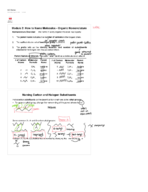
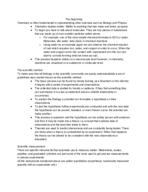
Chem 343 week 1 notes (8/22-8/26) (Chemistry)
CHEM 343
Colorado State University
7 pages | Fall 2015
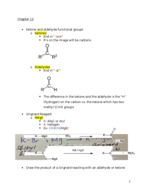

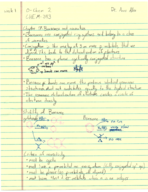


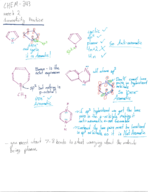
Organic chemistry week 4 notes (Chemistry)
CHEM 341
Colorado State University
11 pages | Spring 2016