PreparED Study Materials

CHE 140: General Chemistry I
School: Illinois State University
Number of Notes and Study Guides Available: 13
Notes

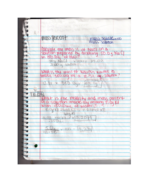
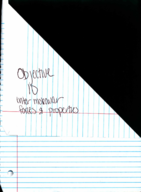
Che140 lecture notes 10.5 - 10.9 (Chemistry)
CHE 140
Illinois State University
5 pages | Summer 2015
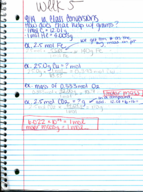
Che140 lecture notes 9.28 - 10.2 (Chemistry)
CHE 140
Illinois State University
7 pages | Summer 2015

Study Guides


Videos

Want To Learn More? To watch the entire video and ALL of the videos in the series:
full solution
Calculating the Mass of a Sucrose Crystal: A Chemistry Insight
Want To Learn More? To watch the entire video and ALL of the videos in the series:
full solution
Explore the fascinating world of chemistry as we calculate the mass of a sugar crystal with 1.8 x 10¹? molecules of sucrose. Using the concept of a mole and Avogadro's number, discover how to convert molecular numbers to milligrams. Grasp foundational principles in a clear, engaging format.
Glycerin Solution Vapor Pressure at 39.88°C
Want To Learn More? To watch the entire video and ALL of the videos in the series:
full solution
Discover how to calculate the vapor pressure of a glycerin solution when mixed with water at a specific temperature. A valuable chemistry lesson.
KOH Volume Needed to Neutralize H?SO? Samples
Want To Learn More? To watch the entire video and ALL of the videos in the series:
full solution
Discover the precise KOH volumes to neutralize H?SO? samples with various concentrations. Learn about the acid-base reaction dynamics and stoichiometry.
Molecular Formulas: Lewis Structures for N2, HCN, CO2, C3H6, and More
Want To Learn More? To watch the entire video and ALL of the videos in the series:
full solution
Discover Lewis structures for various molecular formulas, including N2, HCN, CO2, C3H6, and more. Explore their chemical bonding and structural arrangements.
Counting Chlorine Atoms in Key Chemical Compounds: A Detailed Breakdow
Want To Learn More? To watch the entire video and ALL of the videos in the series:
full solution
Uncover the count of chlorine atoms in various chemical compounds. Grasp the calculations in Carbon tetrachloride, Calcium chloride, Phosphorus trichloride, and Sodium chloride. Gain clarity on atomic count across multiple molecules.
Textbook Solutions (0)
Top Selling Study Tools



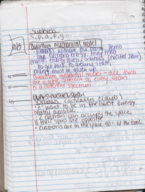
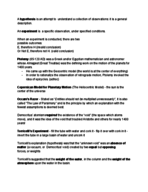
Che140 lecture notes 10.5 - 10.9 (Chemistry)
CHE 140
Illinois State University
5 pages | Summer 2015