PreparED Study Materials

CHEM 111: General Chemistry I
School: University of South Carolina
Number of Notes and Study Guides Available: 112
Notes



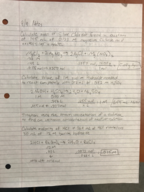







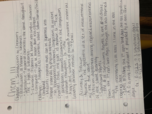
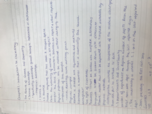






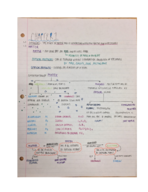
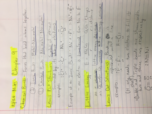














Study Guides


Chem 111, exam 2 study guide (Chemistry)
CHEM 111
University of South Carolina
7 pages | Spring 2015


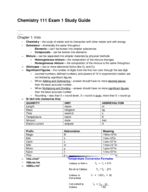





Chemistry exam 1 study guide (Chemistry)
CHEM 111
University of South Carolina
7 pages | Spring 2015

Videos
Calculate oxygen molar concentration in water at 25°C with a partial p

Want To Learn More? To watch the entire video and ALL of the videos in the series:
full solution
This video explores molar concentration (molarity) and demonstrates the calculation of oxygen's molar concentration in water at 25°C, considering a partial pressure of 0.22 atm by employing Henry's Law and the given Henry's Law constant for oxygen, revealing that under these conditions, there are 2.86 x 10?? moles of oxygen per liter of water, highlighting the significance of understanding these concepts for managing gas dissolution in liquids across varying circumstances.
Do Rusting and Burning Violate Conservation of Mass?
Want To Learn More? To watch the entire video and ALL of the videos in the series:
full solution
This video explores the processes of rusting in iron and burning a match, addressing whether the observed changes in mass violate the law of conservation of mass, and explains how these processes align with the law.
From CH? to C?H?: Decoding Molecular Formula with Molar Mass
Want To Learn More? To watch the entire video and ALL of the videos in the series:
full solution
Discover the process of determining a compound's molecular formula from its empirical formula and molar mass. Understand the calculations and reasoning behind deriving C?H? from the empirical formula CH? with a molar mass of 56.11 g/mol. Gain insight into fundamental chemistry concepts and computations.
Challenges in Studying Mitochondrial Respiratory Complexes
Want To Learn More? To watch the entire video and ALL of the videos in the series:
full solution
Explore the complex challenges scientists face when attempting to extract respiratory complexes from the inner mitochondrial membrane for an in-depth study of their properties and functions."
Denver Pressure Conversion: Atmospheres mmHg psi & Pascals Explained
Want To Learn More? To watch the entire video and ALL of the videos in the series:
full solution
Converting Denver's average pressure of 24.9 in. Hg into various units. This video provides clear steps to determine equivalents in millimeters of mercury atmospheres pounds per square inch and pascals. Understand the relationships and conversions between these common pressure units.
Glycerin Solution Vapor Pressure at 39.88°C
Want To Learn More? To watch the entire video and ALL of the videos in the series:
full solution
Discover how to calculate the vapor pressure of a glycerin solution when mixed with water at a specific temperature. A valuable chemistry lesson.