PreparED Study Materials

Notes
Videos
Warming Inhaled Air: Volume Increase Calculation

Want To Learn More? To watch the entire video and ALL of the videos in the series:
full solution
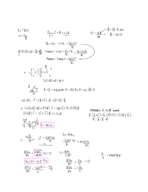
Explore the fascinating science of air temperature change in this video! We calculate how the volume of inhaled air increases as it warms from 0.0°C to body temperature. Discover the principles of thermal expansion in the human body.
Calculating k, Amplitude & Frequency for Fisherman's Scale
Want To Learn More? To watch the entire video and ALL of the videos in the series:
full solution
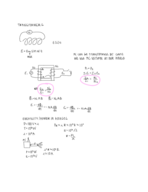
In this video we tackle the real-world physics problem of calculating the spring constant for a fisherman's scale along with the amplitude and frequency of its vibrations when a fish is added. We use Hooke's Law to find the spring constant and then apply oscillation formulas to determine the amplitude and frequency of the fish's vibrations
Violin String Tension and Angle-Dependent Force
Want To Learn More? To watch the entire video and ALL of the videos in the series:
full solution
Discover the physics behind violin string tension and the angle-dependent force required when pushing it against the neck. Explore how the angle affects the force needed.
Projectile Motion: Speed, Height, Time & Range
Want To Learn More? To watch the entire video and ALL of the videos in the series:
full solution
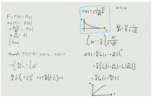
Join us for an engaging exploration of projectile motion as we dissect a fascinating scenario. We delve into the physics of a projectile fired with an initial speed of 36.6 m/s at an angle of 42.2° above the horizontal on a flat firing range. Discover how to determine the maximum height, total time in the air, total horizontal distance covered (range), and the speed of the projectile 1.50 seconds after firing. This video will demystify the dynamics of projectiles in a clear and educational manne
Youngsters' Cliff Dives: Comparing Splashdown Speeds
Want To Learn More? To watch the entire video and ALL of the videos in the series:
full solution
Dive into the physics of cliff jumping as we analyze the splashdown speeds of two adventurous youngsters. Explore the factors that determine their speeds and choose the best explanation among the options provided.
Calculating Ion Path Radius in a Mass Spectrometer: Electric vs Magnet
Want To Learn More? To watch the entire video and ALL of the videos in the series:
full solution
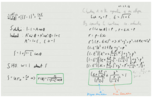
Explore how a mass spectrometer works by analyzing an ion's path through the device. Understand the relationship between electric and magnetic fields in determining the ion's trajectory. Learn to compute the radius of an ion's path within the mass spectrometer.