PreparED Study Materials

CH 201: Quantitative Analytical Chemistry Laboratory
School: Boston University
Number of Notes and Study Guides Available: 15
Notes











Videos
Nickel(II) Nitrate Solution Composition Analysis

Want To Learn More? To watch the entire video and ALL of the videos in the series:
full solution
In this analysis, we determine the composition of a solution prepared by dissolving 12.15g of nickel(II) nitrate in 175mL of water (density 1.00 g/mL). The mass percent of nickel(II) nitrate is found to be approximately 6.50%, and the mole fraction of nickel(II) ions in the solution is calculated as 0.00672.
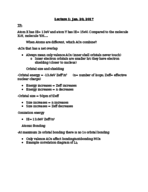
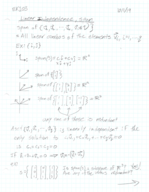
What are the ground-state electron configurations of Ge, Fe, Zn, Ni, W
Want To Learn More? To watch the entire video and ALL of the videos in the series:
full solution
This video provides ground-state electron configurations for various elements, including germanium, iron, zinc, nickel, tungsten, and thallium, based on their atomic numbers.
Understanding Key Assumptions of Kinetic Molecular Theory in Detail!
Want To Learn More? To watch the entire video and ALL of the videos in the series:
full solution
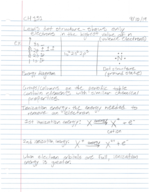
Dive into the Kinetic Molecular Theory of Matter understanding how atoms and molecules possess kinetic energy which we measure as temperature. Explore the five core assumptions including the constant random motion of gas particles and the relation between kinetic energy and temperature. Demystify the concepts of particle collisions intermolecular interactions and the universal behavior of gases at given temperatures
Calculating Ksp for Ca3(PO4)2 at 25°C: Step-by-Step Guide
Want To Learn More? To watch the entire video and ALL of the videos in the series:
full solution
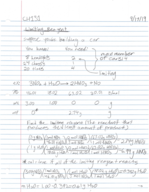
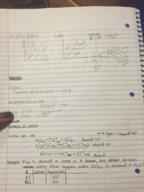
Unravel the concepts of 'Molar Solubility' and 'Solubility Product' to gauge salt solubility. Explore how Calcium Phosphate dissociates in solutions and calculate its unique Ksp value.
Utilizing Chemical Names and Symbols in Copper Cycle Analysis
Want To Learn More? To watch the entire video and ALL of the videos in the series:
full solution
Explore the power of chemical names and symbols in deciphering copper compound formation at each step of the copper cycle, with an illustrative example.
Electrons in outer shell of: Potassium, Calcium, Aluminum
Want To Learn More? To watch the entire video and ALL of the videos in the series:
full solution
This video explains the importance of the number of valence electrons in an element's chemical behavior and demonstrates how to determine the valence electrons for potassium, calcium, and aluminum based on their positions in the periodic table. Valence electrons dictate an element's reactivity with other elements, making this knowledge essential for understanding chemical reactions.