PreparED Study Materials

Videos
Atomic Radius Trends: Unveiling Periodic Table Secrets

Want To Learn More? To watch the entire video and ALL of the videos in the series:
full solution
Discover the intricacies of atomic radius and its trends on the periodic table in this video. Unravel the factors influencing atomic size and explore how elements' positions on the periodic table affect their atomic radii.
Utilizing Chemical Names and Symbols in Copper Cycle Analysis
Want To Learn More? To watch the entire video and ALL of the videos in the series:
full solution
Explore the power of chemical names and symbols in deciphering copper compound formation at each step of the copper cycle, with an illustrative example.
Element Classification: Rep, Trans, Inner-Trans, Noble Gases
Want To Learn More? To watch the entire video and ALL of the videos in the series:
full solution
We categorize elements into representative, transition, inner-transition, and noble gases based on their positions in the periodic table and general characteristics, without revealing specific element classifications.
Molecular Geometry & Polarity: Why CO? & CCl? Are Nonpolar Explained
Want To Learn More? To watch the entire video and ALL of the videos in the series:
full solution
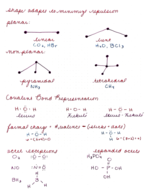
Uncover the intriguing relationship between molecular geometry and polarity in chemistry. Using CO? and CCl? as examples, learn how polar bonds can result in nonpolar molecules. Recognize the role of symmetry in determining molecular polarity.
Calculating Percent Composition: Using Molecular Formulas & Atomic Mas
Want To Learn More? To watch the entire video and ALL of the videos in the series:
full solution
Understand the process of calculating percent composition using the molecular formula. Grasp the methodology with compounds like C2H4O2, CH2O2, and more. Discover how atomic masses influence the mass percent of elements in various compounds.
Physical vs. Chemical: Chlorine Reactions & Magnetism
Want To Learn More? To watch the entire video and ALL of the videos in the series:
full solution
Explore the differences between physical and chemical properties in substances. Learn some fundamentals of chemistry and understand how substances interact and change.