PreparED Study Materials

Notes
Videos
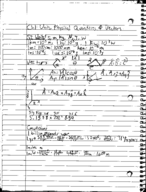
Skiing Down an Incline: Length and Time Calculations

Want To Learn More? To watch the entire video and ALL of the videos in the series:
full solution
Embark on an exhilarating downhill ski adventure! In this video, we calculate the length of the incline and the time it takes for a skier to reach the bottom. Explore the physics of skiing on inclines and the thrill of motion.
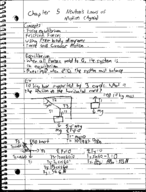
Determining Kinetic Friction with a Spring-Loaded Block
Want To Learn More? To watch the entire video and ALL of the videos in the series:
full solution
Understand how to determine the coefficient of kinetic friction using a wooden block and a spring. Employing the law of conservation of energy, we use the spring's compression and stretch measurements. Through energy equations and Newton's second law, we deduce that ? equals 0.4.
Counting Significant Figures in Numerical Values
Want To Learn More? To watch the entire video and ALL of the videos in the series:
full solution
Join us in exploring the concept of significant figures in numerical values. Learn to identify and count significant figures in various numbers, from whole numbers to decimals. Understand the precision and accuracy of your measurements through this engaging video.
Angle Conversion: Radians to Degrees and Degrees to Radians
Want To Learn More? To watch the entire video and ALL of the videos in the series:
full solution
Learn how to convert between radians and degrees for various angle measurements, expanding your understanding of angular units.
Electric Force Between Spheres Doubled Separation
Want To Learn More? To watch the entire video and ALL of the videos in the series:
full solution
In this enlightening video, we unravel the mysteries of electric charges and forces. Discover the fascinating concept of how the separation between two identical tiny spheres, each carrying the same electric charge, influences the force they exert on each other. Will the force double, become one-quarter as large, or remain unchanged? Join us to explore the intriguing world of electrostatics and the principles that govern electric interactions.
Warming Inhaled Air: Volume Increase Calculation
Want To Learn More? To watch the entire video and ALL of the videos in the series:
full solution
Explore the fascinating science of air temperature change in this video! We calculate how the volume of inhaled air increases as it warms from 0.0°C to body temperature. Discover the principles of thermal expansion in the human body.