PreparED Study Materials

CHEM 2210: Quantitative Chemical Analysis
School: Ohio State University
Number of Notes and Study Guides Available: 0
Videos
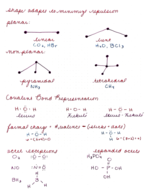
Drawing Lewis Structures for Potassium, Barium, Aluminum, and Bromine

Want To Learn More? To watch the entire video and ALL of the videos in the series:
full solution
We explore Lewis structures, which depict atom bonding and lone electron pairs. We create Lewis structures for potassium, barium, aluminum, and bromine by using group numbers in the periodic table to determine their valence electrons.
Chemical Combo: How N2 and F2 Produce Nitrogen Trifluoride Explained!
Want To Learn More? To watch the entire video and ALL of the videos in the series:
full solution
Explore the chemical combination of nitrogen and fluorine to produce nitrogen trifluoride. Learn how to determine the limiting reactant and calculate the theoretical yield using stoichiometry principles.
Iron Nail Heating: Finding Temperature After 15J Transfer
Want To Learn More? To watch the entire video and ALL of the videos in the series:
full solution
Discover the process of determining the final temperature of an iron nail after heat absorption. Using the specific heat capacity of iron and the heat transfer formula, we calculate the temperature increase and reveal the nail's new thermal state. This tutorial offers a clear understanding of how materials respond to heat.
Pure Substances vs. Mixtures: Classifying Based on Composition & Distr
Want To Learn More? To watch the entire video and ALL of the videos in the series:
full solution
Understand the fundamental distinctions between pure substances and mixtures. Unpack the definitions and real-world examples of elements, compounds, homogeneous, and heterogeneous mixtures.
Counting Chlorine Atoms in Key Chemical Compounds: A Detailed Breakdow
Want To Learn More? To watch the entire video and ALL of the videos in the series:
full solution
Uncover the count of chlorine atoms in various chemical compounds. Grasp the calculations in Carbon tetrachloride, Calcium chloride, Phosphorus trichloride, and Sodium chloride. Gain clarity on atomic count across multiple molecules.
Why is the study of chiral molecules important in biochemistry?
Want To Learn More? To watch the entire video and ALL of the videos in the series:
full solution
This discussion highlights the significance of studying chiral molecules in biochemistry, emphasizing their impact on biological activity, molecular recognition, pharmacokinetics, and biomedical research, without revealing specific examples or findings.