PreparED Study Materials
Notes
Videos
Denver Pressure Conversion: Atmospheres mmHg psi & Pascals Explained

Want To Learn More? To watch the entire video and ALL of the videos in the series:
full solution
Converting Denver's average pressure of 24.9 in. Hg into various units. This video provides clear steps to determine equivalents in millimeters of mercury atmospheres pounds per square inch and pascals. Understand the relationships and conversions between these common pressure units.
Constitution of Compounds: CH4O, CH3Cl, C2H6, CH5N, C2F6, C2H5Br, C3H8
Want To Learn More? To watch the entire video and ALL of the videos in the series:
full solution
Unraveling Molecular Structures: Explore the composition of compounds with molecular formulas CH4O, CH3Cl, C2H6, CH5N, C2F6, C2H5Br, and C3H8. Learn about their unique structures and properties.
SN2 Rate: Doubling NaOH & 1-Bromopropane Effects
Want To Learn More? To watch the entire video and ALL of the videos in the series:
full solution
"Explore how altering concentrations and volume impacts the rate of an SN2 reaction between 1-bromopropane and sodium hydroxide. Learn the rate equation that describes this reaction and see real examples of how rate changes with concentration and volume adjustments
Reversible Enzyme Inhibition: Good or Bad? Exploring Implications
Want To Learn More? To watch the entire video and ALL of the videos in the series:
full solution
Delve into the complex world of enzymes and explore the implications of their reversible inhibition, shedding light on whether it's advantageous or detrimental to biological processes."
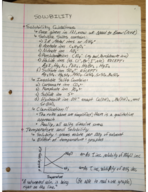
Precipitation Reactions Explained: From Solution to Solid Formation
Want To Learn More? To watch the entire video and ALL of the videos in the series:
full solution
Unravel the chemistry behind precipitation reactions and the creation of insoluble salts. Learn how aqueous ions interact to form solid precipitates, illustrated with examples like silver nitrate and sodium chloride. Understand their significance in fields from water treatment to qualitative analysis.
Want To Learn More? To watch the entire video and ALL of the videos in the series:
full solution