PreparED Study Materials
CHEM 1312: General Chemistry 2 Lecture
School: DCH Regional Medical Center
Number of Notes and Study Guides Available: 1
Notes

Videos
Glycerin Solution Vapor Pressure at 39.88°C

Want To Learn More? To watch the entire video and ALL of the videos in the series:
full solution
Discover how to calculate the vapor pressure of a glycerin solution when mixed with water at a specific temperature. A valuable chemistry lesson.
Challenges in Studying Mitochondrial Respiratory Complexes
Want To Learn More? To watch the entire video and ALL of the videos in the series:
full solution
Explore the complex challenges scientists face when attempting to extract respiratory complexes from the inner mitochondrial membrane for an in-depth study of their properties and functions."
Chemical Formulas: CaI?, N?O?, SiO?, ZnCl? for Atom Ratios
Want To Learn More? To watch the entire video and ALL of the videos in the series:
full solution
Unlock the world of chemical formulas and their atom ratios. Learn to write compounds like CaI?, N?O?, SiO?, and ZnCl? in this chemistry tutorial.
Indium Secrets: Electron Config Magnetism & HCl Reaction
Want To Learn More? To watch the entire video and ALL of the videos in the series:
full solution
This video breaks down the configurations for In In+ In2+ and In3+ distinguishing between diamagnetic and paramagnetic properties. Uncover the oxidation state of Indium in InCl2 and understand its diamagnetic nature.
Molecular Formulas: Lewis Structures for N2, HCN, CO2, C3H6, and More
Want To Learn More? To watch the entire video and ALL of the videos in the series:
full solution
Discover Lewis structures for various molecular formulas, including N2, HCN, CO2, C3H6, and more. Explore their chemical bonding and structural arrangements.
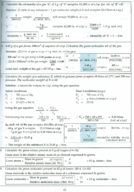
0.800g Match to SO?: Volume Calculation at 725 Torr & 32°C!
Want To Learn More? To watch the entire video and ALL of the videos in the series:
full solution
Detailed walkthrough of calculating sulfur dioxide gas volume produced from burning tetraphosphorus trisulfide. Utilizes stoichiometry and the Ideal Gas Law to derive results under specific conditions. Step-by-step guide for understanding chemical reactions and gas volume calculations