PreparED Study Materials

Notes
Videos
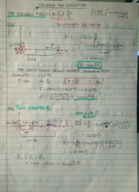
Time and Distance: Comparing 85 km/h and 115 km/h Cars

Want To Learn More? To watch the entire video and ALL of the videos in the series:
full solution
In this video, we explore the concept of time and distance as we compare two cars traveling at different speeds along a straight highway. We'll calculate when the faster car arrives at a destination 16 km away and find out how far they must travel for it to arrive 15 minutes before the slower car. Join us for an engaging journey through the world of physics and velocity!
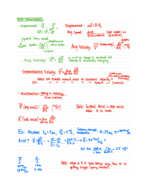
Calculating Electric Charge: Coulomb's Law Demystified
Want To Learn More? To watch the entire video and ALL of the videos in the series:
full solution
Unlock the secrets of calculating electric charge using Coulomb's Law and discover the fascinating world of electrostatic forces. Learn how to determine the charge on two spheres, spaced 20.0 cm apart, and understand the role of elementary particles in this physics tutorial.
Want To Learn More? To watch the entire video and ALL of the videos in the series:
full solution
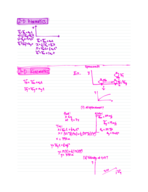
Electric Potential at Circle Center with Symmetric Charges
Want To Learn More? To watch the entire video and ALL of the videos in the series:
full solution
Explore the fascinating world of electric potential as we calculate the value at the center of a circular arrangement of five equally charged particles. Join us for a captivating journey into electrostatics and symmetry in this enlightening video.
Sandal's Velocity Relative to Ship and Shore Observer
Want To Learn More? To watch the entire video and ALL of the videos in the series:
full solution
Explore the intriguing physics of a sandal dropped from a moving ship and learn how to calculate its velocity relative to the ship and a stationary observer on shore.
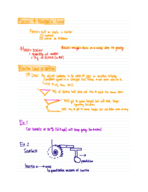
Calculating Rope Tension from a Central Hanging Weight: A Physics Appr
Want To Learn More? To watch the entire video and ALL of the videos in the series:
full solution
Discover how to calculate rope tension with an object hanging in the center. Understand the relationship between the sag, the weight of the object, and the tension. Convert the result into kilonewtons for easy reference.