PreparED Study Materials

CHB 5181: CHB 5181
School: University of Colorado at Boulder
Number of Notes and Study Guides Available: 2
Notes
Videos
Protons reveal electron count in atoms. Which statement applies?

Want To Learn More? To watch the entire video and ALL of the videos in the series:
full solution
In this video, we explore the information that knowledge of the number of protons in a neutral element's atom can provide. Options for determining neutron count, electron count, and identifying the element's name are examined, with a conclusion that it allows us to know both the number of electrons and the element's name.
0.800g Match to SO?: Volume Calculation at 725 Torr & 32°C!
Want To Learn More? To watch the entire video and ALL of the videos in the series:
full solution
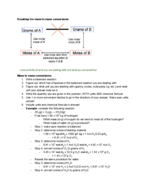
Detailed walkthrough of calculating sulfur dioxide gas volume produced from burning tetraphosphorus trisulfide. Utilizes stoichiometry and the Ideal Gas Law to derive results under specific conditions. Step-by-step guide for understanding chemical reactions and gas volume calculations
Weighting Epsom Salts for Baths & CO? in Soda: Molecular Insight
Want To Learn More? To watch the entire video and ALL of the videos in the series:
full solution
Learn the step-by-step process to convert moles into grams using the molecular weight of Epsom salts (MgSO?) and carbon dioxide (CO?). From bathtub to soda bottle understand the science behind the amounts
CO?: Linear & Nonpolar with Temp Dipole Moments Explained!
Want To Learn More? To watch the entire video and ALL of the videos in the series:
full solution
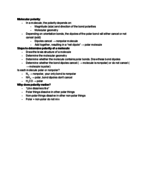
Uncover the nuances of the CO? molecule's polarity and its electron dynamics. Understand how bending and stretching motions influence its electron density. Grasp the analogy of CO? to a jumping rope, highlighting its overall nonpolar nature.
Mastering Mass, Moles, Formula Units & Atoms
Want To Learn More? To watch the entire video and ALL of the videos in the series:
full solution
Discover how to precisely calculate mass, moles, formula units, and atoms in various compounds. Understand the concept with examples like chromium(III) sulfate decahydrate, dichlorine heptoxide, and lithium sulfate. Master chemistry calculations through a step-by-step guide.
Utilizing Chemical Names and Symbols in Copper Cycle Analysis
Want To Learn More? To watch the entire video and ALL of the videos in the series:
full solution
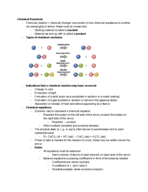
Explore the power of chemical names and symbols in deciphering copper compound formation at each step of the copper cycle, with an illustrative example.