PreparED Study Materials

CHM 112: General Chemistry II
School: Mercer University
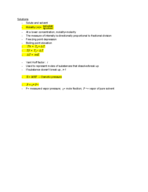
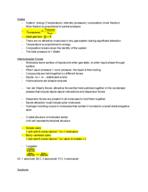
Number of Notes and Study Guides Available: 5
Notes



Study Guides
Videos
Molecular Geometry & Polarity: Why CO? & CCl? Are Nonpolar Explained

Want To Learn More? To watch the entire video and ALL of the videos in the series:
full solution
Uncover the intriguing relationship between molecular geometry and polarity in chemistry. Using CO? and CCl? as examples, learn how polar bonds can result in nonpolar molecules. Recognize the role of symmetry in determining molecular polarity.
Aluminum & Iron(III) Oxide Reaction: Welding Heat & Calculations
Want To Learn More? To watch the entire video and ALL of the videos in the series:
full solution
Explore the chemical reaction between Aluminum and Iron (III) Oxide commonly used in welding. Learn to calculate the mass of Aluminum Oxide formed and identify the excess reagent. Dive deep into molar mass conversions stoichiometry and real-world applications in this chemistry tutorial.
Glycogen Synthesis and Phosphorylase Deactivation: Essential Mechanism
Want To Learn More? To watch the entire video and ALL of the videos in the series:
full solution
Delve into the intricate interplay between glycogen synthesis activation and glycogen phosphorylase deactivation. Discover the essential mechanisms that ensure the efficient management of glucose storage and utilization in the body.
Unveiling Earth's Crust: Calculating Silicon Mass
Want To Learn More? To watch the entire video and ALL of the videos in the series:
full solution
Explore the fascinating process of calculating the mass of silicon in Earth's crust. Learn how to convert Earth's total mass to grams, determine the crust's mass percentage, and find the silicon's mass within the crust. Discover the scale of silicon's presence in our planet's outer layer.
Diluting a 5.5 M KCl Solution to 0.100 M
Want To Learn More? To watch the entire video and ALL of the videos in the series:
full solution
Learn the steps to make a 2.5 L of 0.100 M KCl solution from a 5.5 M stock solution in this easy-to-follow tutorial.
Iron Bar: Mass Change and Rust Formation
Want To Learn More? To watch the entire video and ALL of the videos in the series:
full solution
Learn about mass changes in an iron bar when exposed to moist air, including the formation of rust (Fe?O?) and how to calculate the final mass.