PreparED Study Materials

PHY 18634: Survey of Physics
School: University at Buffalo
Number of Notes and Study Guides Available: 3
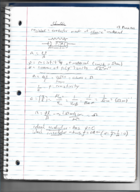
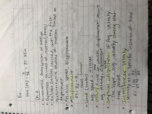
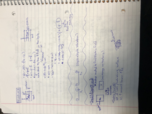
Notes

Videos
Track Radius for 5.5g Acceleration: Approximate Value

Want To Learn More? To watch the entire video and ALL of the videos in the series:
full solution
Delve into the physics of high-speed tracks and calculate the radius where drivers experience a 5.5g acceleration, exploring the multiple options and their implications.
Lunar Lander Descent: Initial and Final Velocities
Want To Learn More? To watch the entire video and ALL of the videos in the series:
full solution
Join us on an exciting lunar adventure as we explore the descent of a lunar lander towards the moon's surface. We'll unravel the physics behind its journey using the equation y(t) = b - ct + dt^2, and answer questions about the lander's initial and final velocities. Get ready to explore the dynamics of space exploration and lunar landings in this informative video!
Want To Learn More? To watch the entire video and ALL of the videos in the series:
full solution
Determining Kinetic Friction with a Spring-Loaded Block
Want To Learn More? To watch the entire video and ALL of the videos in the series:
full solution
Understand how to determine the coefficient of kinetic friction using a wooden block and a spring. Employing the law of conservation of energy, we use the spring's compression and stretch measurements. Through energy equations and Newton's second law, we deduce that ? equals 0.4.
Calculating Enclosed Charge Using Gauss's Law
Want To Learn More? To watch the entire video and ALL of the videos in the series:
full solution
Using a cube measuring 28.0 cm per side, we calculate its total electric flux. Through Gauss's law, we determine the box's enclosed charge. The resultant enclosed charge is 9.77 x 10?? C.
Gravitational Force on the Sun: Earth's Seasonal Variations
Want To Learn More? To watch the entire video and ALL of the videos in the series:
full solution
Explore the intriguing interplay of Earth's elliptical orbit, the changing seasons, and the gravitational forces it exerts on the Sun. We'll provide insights into the ratio of these forces and challenge you to consider multiple perspectives on this celestial phenomenon.