PreparED Study Materials

CHM 22075: Chemical Skills and Reasoning
School: Wayne State University
Number of Notes and Study Guides Available: 4
Notes


Videos
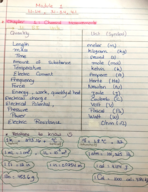
Metric Conversions: cm to m, g to kg, cm to mm, mL to L

Want To Learn More? To watch the entire video and ALL of the videos in the series:
full solution
Master metric unit conversions with step-by-step examples, including cm to meters, g to kilograms, cm to millimeters, and mL to liters.
Potassium and Iodine Monatomic Ions: Atomic Insights Revealed
Want To Learn More? To watch the entire video and ALL of the videos in the series:
full solution
Discover the monatomic ions formed by potassium and iodine in this informative chemistry tutorial. Learn how to determine ion charges based on atomic properties and their positions on the periodic table.
Diprotic Acid Titration: Determining Molar Mass
Want To Learn More? To watch the entire video and ALL of the videos in the series:
full solution
Discover how to find the molar mass of an unknown diprotic acid through a titration experiment with 0.1288 M NaOH. Learn step by step in this chemistry tutorial.
Dimethylamine vs. Trimethylamine: Structures & Boiling Points
Want To Learn More? To watch the entire video and ALL of the videos in the series:
full solution
Uncover the science behind boiling points and molecular interactions in this video. Explore why Dimethylamine boils at a higher temperature than Trimethylamine, despite having a lower molecular weight, and gain insights into the role of molecular structures in determining physical properties.
Number of molecules in 3.5g H?O, 56.1g N?, 89g CCl?, 19g C?H??O?
Want To Learn More? To watch the entire video and ALL of the videos in the series:
full solution
This video shows how to determine the number of molecules in a given sample by utilizing the concept of moles, Avogadro's number (6.022 x 10²³), and the molar mass of the substance. It provides step-by-step calculations for different substances, converting mass to the number of molecules and highlighting the versatile application of this approach.
Balancing the Photosynthesis Equation: CO?, H?O to Glucose & O?
Want To Learn More? To watch the entire video and ALL of the videos in the series:
full solution
Discover the balanced chemical equation for photosynthesis, where CO? and H?O produce glucose and O?. Uncover the step-by-step breakdown of the equation, ensuring atom balance. Grasp a clear understanding of this vital process in plant biology.