PreparED Study Materials

CHM 400: Advanced Chemistry for Engineers
School: Arizona State University
Number of Notes and Study Guides Available: 7
Notes






Videos
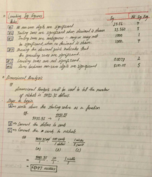
Making a 0.150 M Ba(OH)? Solution: A Step-by-Step Guide

Want To Learn More? To watch the entire video and ALL of the videos in the series:
full solution
Learn how to calculate the amount of Barium hydroxide, Ba(OH)?, needed to prepare a specific molar concentration. This tutorial breaks down the relationship between moles of hydroxide ions and moles of Ba(OH)?, guiding users through each step for precise results. Embrace the essence of molarity in solution preparation.
Want To Learn More? To watch the entire video and ALL of the videos in the series:
full solution
Weighting Epsom Salts for Baths & CO? in Soda: Molecular Insight
Want To Learn More? To watch the entire video and ALL of the videos in the series:
full solution
Learn the step-by-step process to convert moles into grams using the molecular weight of Epsom salts (MgSO?) and carbon dioxide (CO?). From bathtub to soda bottle understand the science behind the amounts
What is meant by K?.??
Want To Learn More? To watch the entire video and ALL of the videos in the series:
full solution
Delve into the world of biochemistry and discover what this critical parameter means in the context of binding constants. We'll break down the significance of K?.? and explain how it's used to quantify the strength of interactions in various biological processes. Whether you're a student, scientist, or simply curious about the world of science, this video will provide you with a clear understanding of K?.? and its role in biochemical research.
Unveiling Earth's Crust: Calculating Silicon Mass
Want To Learn More? To watch the entire video and ALL of the videos in the series:
full solution
Explore the fascinating process of calculating the mass of silicon in Earth's crust. Learn how to convert Earth's total mass to grams, determine the crust's mass percentage, and find the silicon's mass within the crust. Discover the scale of silicon's presence in our planet's outer layer.
Electrons in outer shell of: Potassium, Calcium, Aluminum
Want To Learn More? To watch the entire video and ALL of the videos in the series:
full solution
This video explains the importance of the number of valence electrons in an element's chemical behavior and demonstrates how to determine the valence electrons for potassium, calcium, and aluminum based on their positions in the periodic table. Valence electrons dictate an element's reactivity with other elements, making this knowledge essential for understanding chemical reactions.