PreparED Study Materials

CHEM 031: Chemical Equilibria in Aqueous Systems
School: Lehigh University
Number of Notes and Study Guides Available: 13
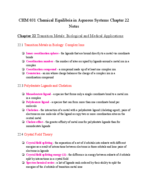
Notes




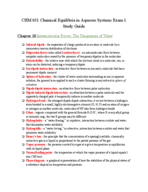
Study Guides


Videos
Utilizing Chemical Names and Symbols in Copper Cycle Analysis

Want To Learn More? To watch the entire video and ALL of the videos in the series:
full solution
Explore the power of chemical names and symbols in deciphering copper compound formation at each step of the copper cycle, with an illustrative example.
Calculating Percent Composition: Using Molecular Formulas & Atomic Mas
Want To Learn More? To watch the entire video and ALL of the videos in the series:
full solution
Understand the process of calculating percent composition using the molecular formula. Grasp the methodology with compounds like C2H4O2, CH2O2, and more. Discover how atomic masses influence the mass percent of elements in various compounds.
Calculating Water's Final Temp after a 345 kJ Heat Boost
Want To Learn More? To watch the entire video and ALL of the videos in the series:
full solution
Discover how to determine the final temperature of a water sample after heat absorption. Utilizing the concept of specific heat capacity and the formula q = mc?T, we calculate the change in temperature and reveal its new state. Experience the transformation from an initial tepid state to a drastically altered thermal condition.
Determining Ionizable H Atoms in Malonic Acid via Neutralization
Want To Learn More? To watch the entire video and ALL of the videos in the series:
full solution
Explore the process of determining ionizable hydrogen atoms in malonic acid using its molecular formula C3H4O4 and a neutralization reaction with Sodium hydroxide. Through methodical calculations involving the given mass of malonic acid and the required volume of Sodium hydroxide for neutralization we uncover that each molecule of malonic acid contains two ionizable H atoms.
Want To Learn More? To watch the entire video and ALL of the videos in the series:
full solution
Sketching Lewis Structures: Radical Species ClF? and BrO? Explained
Want To Learn More? To watch the entire video and ALL of the videos in the series:
full solution
This video elucidates the method to sketch Lewis structures for the radical species ClF? and BrO?. Highlighting the distinguishing feature of an unpaired electron, we illustrate the bond arrangements and lone pairs that define these unique chemical entities.