PreparED Study Materials

CHEM 2080: Organic Chemistry II
School: Auburn University
Number of Notes and Study Guides Available: 26
Notes

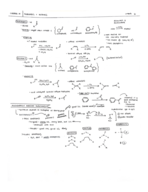

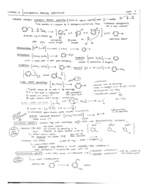
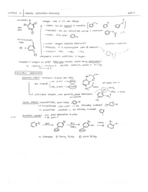


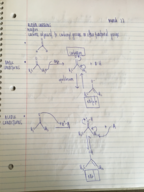





Study Guides


Videos
Determining Base Concentration Using KHP: Indicator Choice Solution

Want To Learn More? To watch the entire video and ALL of the videos in the series:
full solution
Discover how to choose the right indicator for a titration involving Potassium hydrogen phthalate (KHP) and a strong base. Grasp the calculations from molar mass to pH and understand why Thymolphthalein is the ideal choice for a change near pH 8.95.
1828 Synthesis of Urea: Pioneering Steps in Biochemistry
Want To Learn More? To watch the entire video and ALL of the videos in the series:
full solution
Explore the groundbreaking moment in 1828 when Wöhler synthesized urea, the first organic compound. Join us in this video as we trace the profound impact of this achievement on the field of biochemistry and its significance in unraveling the mysteries of life's complex chemistry.
Drawing the Lewis Structure for Glycine: The Protein Building Block
Want To Learn More? To watch the entire video and ALL of the videos in the series:
full solution
Discover how amino acids, specifically glycine, form the foundation of proteins. Understand and visualize the Lewis structure representation of glycine. Grasp the significance of atomic bonding and electron distribution.
Converting Pressure Units to Atmospheres: mmHg, bars, Torr, kPa
Want To Learn More? To watch the entire video and ALL of the videos in the series:
full solution
In this instructional video, we explore the conversion of various pressure units into atmospheres, covering mmHg, bars, Torr, and kPa. The process involves utilizing conversion factors to ensure accurate results for each unit. By the end, you'll have equivalent pressures in atmospheres for the given values, enhancing your understanding of pressure conversions.
Molecule Count in 0.334 g of C?H?: Ethane Analysis
Want To Learn More? To watch the entire video and ALL of the videos in the series:
full solution
This instructional video guides you through the process of determining the number of molecules in a given sample. It illustrates the conversion from grams to moles using the molar mass of the substance and then to molecules using Avogadro's number, providing a practical example with ethane (C?H?) to calculate approximately 6.67 x 10²¹ molecules in a 0.334 g sample.
Calculating the Mass Percent Composition of Chloroform (CHCl?)
Want To Learn More? To watch the entire video and ALL of the videos in the series:
full solution
In this video, we delve into the concept of percent composition by mass, exemplified through the compound chloroform (CHCl?), which was once employed as an inhalation anesthetic despite its associated toxicity. By calculating the percent composition for each element within the compound, we gain valuable insights into its composition and its potential effects on health and properties.