PreparED Study Materials

CHEM,PHYS 111: General Chemistry 1
School: Coastal Carolina University
Number of Notes and Study Guides Available: 6
Notes
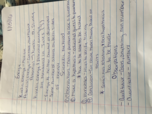
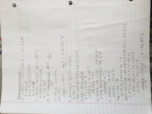

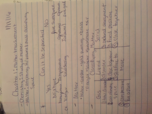
Study Guides


Videos
Classifying Substances: From Pure Elements to Mixtures Explained

Want To Learn More? To watch the entire video and ALL of the videos in the series:
full solution
Classify substances into various categories: element compound homogeneous mixture and heterogeneous mixture. This video breaks down the fundamental distinctions between pure substances and mixtures illustrating with real-world examples like urine pure water a Snickers™ bar and soil. A concise guide for understanding the essence of material classification in chemistry.
Validating & Correcting Chemical Equations: Ba(NO?)? to LiCl Reactions
Want To Learn More? To watch the entire video and ALL of the videos in the series:
full solution
Dive into the accuracy of four chemical reactions involving compounds like Barium Nitrate and Lithium Chloride. Discover which reactions yield precipitates which are correct and which need correction. A comprehensive review from Barium Sulfate formation to Lead Chloride precipitation
What are the ground-state electron configurations of Ge, Fe, Zn, Ni, W
Want To Learn More? To watch the entire video and ALL of the videos in the series:
full solution
This video provides ground-state electron configurations for various elements, including germanium, iron, zinc, nickel, tungsten, and thallium, based on their atomic numbers.
Quantifying Atoms Molecules & Moles: A Comprehensive Chemistry Guide
Want To Learn More? To watch the entire video and ALL of the videos in the series:
full solution
Grasp the fundamental concept of moles in chemistry by equating it to the universally understood notion of a dozen. This video breaks down the usage of Avogadro's constant demonstrating calculations from moles to particles and vice versa. Using real-world examples like Carbon atoms Sulfur Dioxide molecules and Iron atoms viewers gain a clear understanding of moles and particle conversions
Vaporization vs. Condensation: Heat Dynamics in Phase Transitions
Want To Learn More? To watch the entire video and ALL of the videos in the series:
full solution
Unravel the science behind endothermic and exothermic processes by studying vaporization and condensation. Grasp the molecular changes involved and understand the role of heat in these transformations. A comprehensive look into why vaporization requires heat, while condensation releases it.
The mass of a sugar crystal with 1.8 × 10¹? sucrose molecules
Want To Learn More? To watch the entire video and ALL of the videos in the series:
full solution
This video guides you through calculating the theoretical yield of a product in moles for a given chemical reaction by identifying the limiting reactant. It explains how to determine the limiting reactant for different quantities of reactants and then calculates the corresponding moles of the product, ensuring an accurate theoretical yield estimation.