PreparED Study Materials

CHEM 3000: CHEMICAL LITERATURE
School: Auburn University
Number of Notes and Study Guides Available: 19
Notes


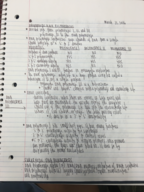

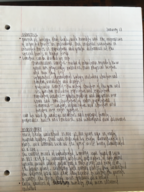


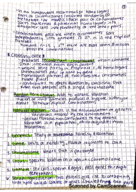
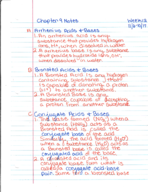
Study Guides


Videos
Volume of 49.8g HCl Gas at STP: Finding the Answer in Liters

Want To Learn More? To watch the entire video and ALL of the videos in the series:
full solution
This video guides viewers through the process of calculating the volume occupied by Hydrochloric acid gas or HCl at standard temperature and pressure. Using the molar mass of HCl and its properties as an ideal gas the tutorial comprehensively explains each step to determine the volume from a given mass at STP. A must-watch for understanding gas volume conversions in chemistry
Volume Calculation for Acetone, Olive Oil, and Chloroform
Want To Learn More? To watch the entire video and ALL of the videos in the series:
full solution
In this video, the presenter demonstrates the process of calculating the volume of 125g for three different liquids—Acetone, Olive oil, and Chloroform—using the formula "Volume = Mass / Density," providing step-by-step solutions for each liquid, ultimately revealing their respective volumes. This instructional video guides viewers through the calculations and showcases the outcome for each liquid's volume.
Mastering Ionic and Net Ionic Equations for Varied Chemical Reactions
Want To Learn More? To watch the entire video and ALL of the videos in the series:
full solution
Discover the art of writing balanced, complete ionic, and net ionic equations for various chemical reactions. Learn the nuances that differentiate between these equations and watch them applied to diverse chemical reactants.
Potassium and Iodine Monatomic Ions: Atomic Insights Revealed
Want To Learn More? To watch the entire video and ALL of the videos in the series:
full solution
Discover the monatomic ions formed by potassium and iodine in this informative chemistry tutorial. Learn how to determine ion charges based on atomic properties and their positions on the periodic table.
Want To Learn More? To watch the entire video and ALL of the videos in the series:
full solution
Deriving the Perfect Gas Equation from Gas Laws
Want To Learn More? To watch the entire video and ALL of the videos in the series:
full solution
Learn how the ideal gas equation is derived from Boyle's law, Charles’ law, and Avogadro's principle, unraveling the fundamentals of gas behavior.