PreparED Study Materials

PHYS 101: Physical Geology
School: California State University - Fullerton
Number of Notes and Study Guides Available: 11
Notes


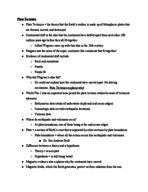

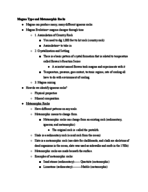


Study Guides


Videos
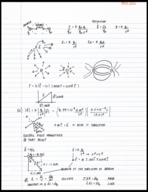
Electric Potential at Circle Center with Symmetric Charges

Want To Learn More? To watch the entire video and ALL of the videos in the series:
full solution
Explore the fascinating world of electric potential as we calculate the value at the center of a circular arrangement of five equally charged particles. Join us for a captivating journey into electrostatics and symmetry in this enlightening video.
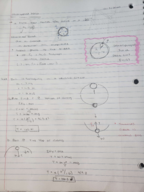
Tennis Ball Momentum and Change in Direction
Want To Learn More? To watch the entire video and ALL of the videos in the series:
full solution
Explore the physics of a tennis ball hitting a wall and its momentum changes. Learn about the original momentum, changes, and the concept of reference objects in this engaging video.
Want To Learn More? To watch the entire video and ALL of the videos in the series:
full solution
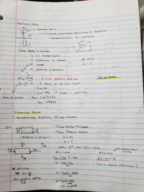
Determining Kinetic Friction with a Spring-Loaded Block
Want To Learn More? To watch the entire video and ALL of the videos in the series:
full solution
Understand how to determine the coefficient of kinetic friction using a wooden block and a spring. Employing the law of conservation of energy, we use the spring's compression and stretch measurements. Through energy equations and Newton's second law, we deduce that ? equals 0.4.
Counting Significant Figures in Numerical Values
Want To Learn More? To watch the entire video and ALL of the videos in the series:
full solution
Join us in exploring the concept of significant figures in numerical values. Learn to identify and count significant figures in various numbers, from whole numbers to decimals. Understand the precision and accuracy of your measurements through this engaging video.
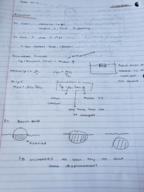
Particle Count, Charge, and Mass of Electron-Proton System
Want To Learn More? To watch the entire video and ALL of the videos in the series:
full solution
oin us as we delve into the intriguing world of subatomic particles! In this video, we'll decipher the composition of a system containing 1525 electrons and protons with a net charge of -5.456 x 10^-17 C. Discover the precise number of electrons and calculate the total mass of this dynamic system. Unlock the secrets of particle physics with us!