
PreparED Study Materials

CHEM 1513: General Chemistry for Majors 2
School: University of Colorado Colorado Springs
Number of Notes and Study Guides Available: 2
Notes


Videos
Pseudo-Noble Gas Configurations: A Unique Path to Atomic Stability

Want To Learn More? To watch the entire video and ALL of the videos in the series:
full solution
Discover the concept of the pseudo-noble gas configuration, differentiating it from the traditional noble gas configuration. Examine examples like tin and indium to illustrate how elements achieve this unique state of stability. Unpack the intriguing intricacies within atomic structures.
Do Rusting and Burning Violate Conservation of Mass?
Want To Learn More? To watch the entire video and ALL of the videos in the series:
full solution
This video explores the processes of rusting in iron and burning a match, addressing whether the observed changes in mass violate the law of conservation of mass, and explains how these processes align with the law.
Volume of 49.8g HCl Gas at STP: Finding the Answer in Liters
Want To Learn More? To watch the entire video and ALL of the videos in the series:
full solution
This video guides viewers through the process of calculating the volume occupied by Hydrochloric acid gas or HCl at standard temperature and pressure. Using the molar mass of HCl and its properties as an ideal gas the tutorial comprehensively explains each step to determine the volume from a given mass at STP. A must-watch for understanding gas volume conversions in chemistry
The steps in the electron transport chain from NADH to oxygen
Want To Learn More? To watch the entire video and ALL of the videos in the series:
full solution
The electron transport chain (ETC) is a critical process in cellular respiration and photosynthesis, involving the transfer of electrons and protons through a series of protein complexes and molecules to create an electrochemical gradient, ultimately producing ATP with molecular oxygen as the final electron acceptor.
Determining Bond Types: Ionic, Polar Covalent, or Covalent in Chemical
Want To Learn More? To watch the entire video and ALL of the videos in the series:
full solution
This discussion revolves around the classification of chemical bonds as ionic, polar covalent, or covalent based on the electronegativity difference between the atoms involved. The general criteria for this classification are explained: a difference greater than 1.7 indicates an ionic bond, between 0.5 and 1.7 signifies a polar covalent bond, and less than 0.5 designates a covalent bond. It then applies these criteria to four specific examples, including the CC bond in ethane (H?CCH?), the KI bo
Glucose Polymer with Alternating Glycosidic Linkages: Structure and Fu
Want To Learn More? To watch the entire video and ALL of the videos in the series:
full solution
Explore the fascinating discovery of a glucose polymer with alternating glycosidic linkages. We'll visualize its Haworth projection and investigate its potential role in organisms, pondering whether it primarily serves a structural or energy storage function. Additionally, we'll discuss which types of organisms might utilize this unique polysaccharide as a potential food source.
Textbook Solutions (0)
Top Selling Study Tools


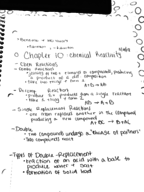


Chapter 5 notes (Chemistry)
CHEM 3101
University of Colorado Colorado Springs
11 pages | Winter 2016


