PreparED Study Materials

PHYS 2074: University Physics II
School: University of Arkansas
Number of Notes and Study Guides Available: 21
Notes


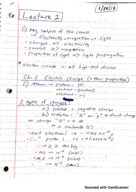


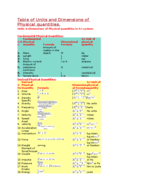
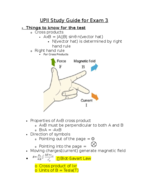
Study Guides



Videos
Earth's Measurements: Circumference, Surface Area, and Volume

Want To Learn More? To watch the entire video and ALL of the videos in the series:
full solution
Explore Earth's dimensions in this video! We calculate its circumference, surface area, and volume. Join us to understand the scope of our planet, both in its physical size and mathematical concepts.
Solving Acceleration & Deceleration Queries for a Commuter Train Expla
Want To Learn More? To watch the entire video and ALL of the videos in the series:
full solution
Explore the physics of a light-rail commuter train's motion. Understand how to calculate times for acceleration and deceleration using the equations of motion. Dive into the concept of emergency deceleration and its implications.
Sandal's Velocity Relative to Ship and Shore Observer
Want To Learn More? To watch the entire video and ALL of the videos in the series:
full solution
Explore the intriguing physics of a sandal dropped from a moving ship and learn how to calculate its velocity relative to the ship and a stationary observer on shore.
Projectile Range and Optimal Launch Angles Explained
Want To Learn More? To watch the entire video and ALL of the videos in the series:
full solution
Join us in this enlightening video as we explore the fascinating world of projectiles and their optimal launch angles. We dive into the physics behind how a fixed initial speed affects the range of a projectile and why, for most angles, there are two choices that yield the same range. Delve into factors that affect an archer's ability to hit a target, including wind, and learn why a smaller angle, closer to the horizontal, is often preferable. Discover when and why a larger angle may be necessar
Geosynchronous Satellite Speed and Acceleration
Want To Learn More? To watch the entire video and ALL of the videos in the series:
full solution
Explore the fascinating world of geosynchronous satellites in this video. Learn how these communication satellites are strategically placed in circular orbits, staying directly over fixed points on the Earth's equator as our planet rotates. We delve into the physics behind these orbits, calculating the speed and acceleration of a satellite in geosynchronous orbit, using the Earth's radius and altitude as reference. Gain a deeper understanding of the science that enables global communications.
Oscillating Mass: Period Calculation for 0.2 m Displacement
Want To Learn More? To watch the entire video and ALL of the videos in the series:
full solution
Join us to unravel the mystery of oscillations! In this video, we'll determine the period of a mass oscillating with a 0.2 m displacement and 1.2 m/s maximum speed. Explore the physics behind periodic motion and discover the key to calculating its period. Dive into the world of harmonic motion with us!