PreparED Study Materials

PHY 315: Mathematical Tools for Physics
School: University of Miami
Number of Notes and Study Guides Available: 0
Videos
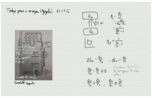
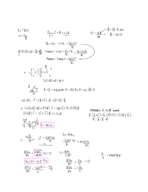
Squirrel's Fall: Velocity and Deceleration Analysis

Want To Learn More? To watch the entire video and ALL of the videos in the series:
full solution
Analyze the physics of a falling squirrel, calculating its velocity upon hitting the ground and the deceleration due to limb bending.
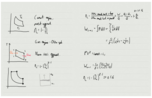
Physics of Bouncing: Calculating Velocity & Energy Conservation Explor
Want To Learn More? To watch the entire video and ALL of the videos in the series:
full solution
Discover how energy conservation principles determine the velocity of a bouncing ball. Relate the ball's height and its potential and kinetic energies. Understand the velocity change upon impact and rebound.
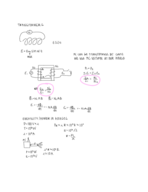
Calculating Ion Path Radius in a Mass Spectrometer: Electric vs Magnet
Want To Learn More? To watch the entire video and ALL of the videos in the series:
full solution
Explore how a mass spectrometer works by analyzing an ion's path through the device. Understand the relationship between electric and magnetic fields in determining the ion's trajectory. Learn to compute the radius of an ion's path within the mass spectrometer.
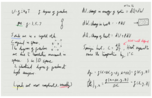
Determining Mercury's Latent Heat of Fusion Using Calorimeter Data Exp
Want To Learn More? To watch the entire video and ALL of the videos in the series:
full solution
Discover how to calculate the latent heat of fusion of mercury using calorimetry. Grasp the role of thermal equilibrium in heat transfer calculations. Derive the value of mercury's latent heat of fusion based on experimental data.
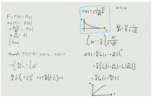
Unraveling Bead Motion: Force, Acceleration & Energy
Want To Learn More? To watch the entire video and ALL of the videos in the series:
full solution
Explore the dynamics of a bead under constant force. Understand its acceleration, velocity over time, and how to calculate its kinetic energy. Witness the interplay of motion equations and real-world applications in a simple system.
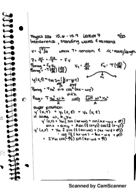
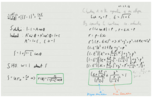
Principal Axes and Moments in Rotational Symmetry
Want To Learn More? To watch the entire video and ALL of the videos in the series:
full solution
Unravel the mysteries of rotational symmetry and principal axes in this video. We prove the relationships between the axis of symmetry and principal axes, showcasing the equal principal moments. Join us for an exploration of the fundamental concepts of rigid body dynamics.