PreparED Study Materials

CHEM 112: General Chemistry II
School: Pace University
Number of Notes and Study Guides Available: 16
Notes


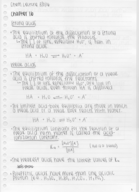

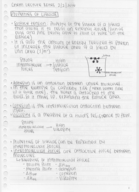


Study Guides

Videos
Cyclohexane to Adipic Acid: Nylon's Yield Calculations

Want To Learn More? To watch the entire video and ALL of the videos in the series:
full solution
Explore the fascinating conversion of cyclohexane and oxygen into adipic acid, essential in nylon manufacture. This video breaks down the calculation of theoretical yield, actual yield, and the resultant percent yield of the process. From molar masses to intricate equations, get a concise understanding of this industrial reaction.
Conjugate Bases of Brønsted Acids: Formulas and Descriptions
Want To Learn More? To watch the entire video and ALL of the videos in the series:
full solution
This video delves into the fundamental concept of conjugate bases in the context of the Brønsted-Lowry theory of acids and bases, explaining how when acids donate protons, they transform into their respective conjugate bases. This understanding is exemplified through the specific reactions of various compounds, illustrating how each Brønsted acid, upon proton donation, gives rise to its corresponding conjugate base.
Calculating Vapor Pressure & Its Lowering: Urea in Water at 35°C
Want To Learn More? To watch the entire video and ALL of the videos in the series:
full solution
Explore the intriguing process of determining the vapor pressure of a urea-water solution at 35°C. Using Raoult's law we'll calculate the mole fraction of water and urea leading to the solution's vapor pressure. Learn how the solution's composition affects vapor-pressure lowering
Positron Emission Nuclear Equations: Co-55, Na-22, F-18
Want To Learn More? To watch the entire video and ALL of the videos in the series:
full solution
Learn how to write nuclear equations for positron emission with Co-55, Na-22, and F-18. Explore the fascinating world of nuclear reactions.
Calculating the Mass Percent Composition of Chloroform (CHCl?)
Want To Learn More? To watch the entire video and ALL of the videos in the series:
full solution
In this video, we delve into the concept of percent composition by mass, exemplified through the compound chloroform (CHCl?), which was once employed as an inhalation anesthetic despite its associated toxicity. By calculating the percent composition for each element within the compound, we gain valuable insights into its composition and its potential effects on health and properties.
Want To Learn More? To watch the entire video and ALL of the videos in the series:
full solution